Monday, June 11, 2012

Apple expected to show fresh software, new Macs

NEW YORK (AP) â€" Apple CEO Tim Cook is expected to show off new iPhone software, updated Mac computers and provide more details on future releases of Mac software when he kicks off the company's annual conference for software developers on Monday.

The announcement of new software for the iPhone, iPad and iPod Touch has been confirmed by banners that appeared at the Moscone conference center in San Francisco on Friday, reading "iOS 6." It's not much of a surprise. Apple has used its Worldwide Developers Conference as an opportunity to announce new iPhone software for the past few years.

What's not known is what new features will come with iOS 6, or when it will be released to consumers. Usually, the new software becomes available for download around the time a new iPhone model appears. Apple-watchers expect the next version of the iPhone, the iPhone 5, to appear this fall, about a year after the launch of the 4S model.

In 2010, Apple demonstrated the new iPhone 4 at the WWDC, but analysts don't expect the company to show off a phone model this year.

With the launch of iOS 5 last year, Apple added many features already found in competing smartphone software. It also added the "Siri" virtual assistant feature, which interprets voice commands and talks back to the user.

This year, there are fewer "catch up" features to add, so Apple watchers expect more modest improvements. Some speculate that Facebook could become more tightly integrated, in much the same way that Apple baked Twitter functions into its software last year. That could make it easier to post Facebook status updates from within Apple's apps.

On the Mac software side, there are fewer unknowns. Apple already demonstrated most of the features of OS X 10.8 "Mountain Lion" in February and said it will go on sale late this summer. Developers are already able to download a version of the software. It narrows the gap between the PC and phone software packages, making Mac personal computers work more like iPhones.

Microsoft Corp., Apple's chief competitor in PC software, is on a parallel course. It's set to release Windows 8 later this year, bringing the look and user interface of Windows Phone to PCs.

Cook is also expected to announce new Mac models. Intel Corp. has just updated its processor line with faster, less power-hungry chips, and most of Apple's Mac lines haven't had a major update in a year.

The biggest mystery surrounds Apple's ambitions in television-making. Late company founder Steve Jobs told biographer Walter Isaacson that he wanted to remake the TV. Apple does sell an "Apple TV," but it's small box that connects to a TV to display movies from iTunes. There's much speculation that Apple plans to make a full-blown TV set, integrated with iTunes.

Few company watchers expect Apple to reveal such a set at WWDC, but there's broad speculation that it could make a minor step toward Jobs' goal by releasing updated software for the Apple TV, expanding on its relatively limited functions.

Tactus creates tactile user interface for buttons on demand

If you’re a fan of physical keyboards rather than using touchscreens all the time, then this video is for you.

Tactus Technology has developed a new tactile user interface for touchscreen devices that makes physical buttons magically appear on the surface of device when required. When the buttons are not required, they simply slink back to leave a smooth, seamless flat touch-screen.

The secret lies in the special ‘Tactile Layer’ that integrates with existing touchscreens by replacing the device’s top layer with the Tactus surface. Since it’s the same thickness it doesn’t add any extra thickness or weight, and consumes very little power as well.

Check out the quick demo video below:

Saturday, June 09, 2012

Nearly 6.5 million LinkedIn passwords hacked!

Late yesterday evening news came out that a user on Russian forum hacked LinkedIn and uploaded 6,458,020 hashed passwords, however, no usernames were released. Of course, that is not to say that the hacker doesn’t have matching usernames for each of the passwords.

LinkedIn has since confirmed that the security breach did indeed occur, although they haven’t cited the exact number of passwords stolen. The following steps were listed for those whose accounts have been compromised:

  1. Members that have accounts associated with the compromised passwords will notice that their LinkedIn account password is no longer valid.
  2. These members will also receive an email from LinkedIn with instructions on how to reset their passwords. There will not be any links in this email. Once you follow this step and request password assistance, then you will receive an email from LinkedIn with a password reset link.
  3. These affected members will receive a second email from our Customer Support team providing a bit more context on this situation and why they are being asked to change their passwords.

Since the breach, Linked has enhanced their password security which includes hashing and salting of all the passwords in their database. Salting the passwords basically means that once a password is hashed, it is then combined with another string of digits and then rehashed and stored in the database. It is disturbing that such a necessary security measure took place only after such a huge security breach.


Facebook rolling out central location for apps

NEW YORK (AP) â€" There's more to Facebook apps than "Angry Birds" and Pinterest, but many users wouldn't know that because there hasn't been a good, central way to find them.

Facebook Inc. is trying to change that. On Thursday, Facebook is beginning to roll out its App Center to its nearly 1 billion users, so they can find games and other applications with social components more easily.

The App Center, available on Facebook's website and on Apple and Android mobile devices, will recommend apps to users based on their interests, the types of apps their friends like, or the apps they have liked in the past.

Many people are introduced to Facebook apps in the form of sometimes-annoying requests from their friends for poker partners, Scrabble buddies or neighbors on virtual farms. Those requests haven't necessarily matched a user's specific interests.

The new App Center will initially feature about 600 Facebook apps, mostly games, reviewed by the company to meet its quality standards. Games, such as Zynga's "CityVille" and Electronic Arts' "The Sims," are the most popular types of apps on Facebook.

But the company is betting that by personalizing recommendations to users, people will find new types of applications beyond games, along with games that are more interesting to them. There are all sorts of social apps that use Facebook, from music-listening services such as Spotify to what-you-just-ate tools such as Foodspotting.

"We spend all day, every day building a platform (so that) great social games and apps can exist," said Matt Wyndowe, product manager for apps and games at Facebook. But a common question has long been where to find them. "Up until now, we haven't had a great answer to that question."

Facebook said that on mobile devices, the App Center won't compete with other app stores, such as Apple's or Google's. Rather, the App Center will send users to those other stores to download the programs. People can also get mobile apps from their regular computers by using a feature called "send to mobile."

Among the roughly 600 applications included in the App Center at launch will be the Nike Plus GPS running app, which lets users track their runs and broadcast it to their Facebook feed. Ricky Engelberg, whose title at Nike is experience director at digital sport, said having a place where apps are showcased will "let more people be part of the Nike Plus community."

The App Center, which Facebook announced last month, will be rolled out to U.S. users beginning Thursday night and to everyone else over the coming weeks.

___

Online:

http://www.facebook.com/appcenter

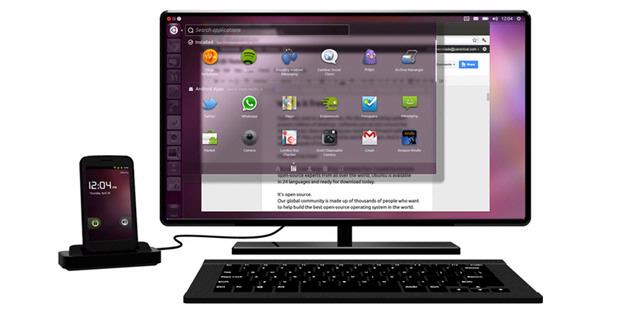
Ubuntu mobile phone Best Slow Launched 2013


Ubuntu Linux operating system is a mobile version, which is being developed to be run on the smartphone, giving a sign that the scheduled launch draws near, the end of this year or even early 2013.

Canonical officials, as the company that develops Ubuntu, it hinted at the sidelines of the Computex technology exhibition in Taiwan, beginning in June 2012.

John Barnard, Global Marketing Manager for Canonical, said there will be an announcement about the Ubuntu OS for smartphones by year's end, although he did not say the announcement was a moment of the launch of Ubuntu smartphone.

Canonical founder Mark Shuttkeworth just say the word "may", as he did not give the exact date, when asked about the Ubuntu smartphone launch in late 2012 or early 2013.

Both are similar to say, Ubuntu is still being developed for smartphones. Ubuntu for the smartphone will not be immediately available for download, but it will be pinned directly on the smartphone device.

Ubuntu development for smartphones and tablet promulgated by Canonical and in 2011.

Thursday, June 07, 2012

Great potential of Mobile Augmented Reality


Today, the use of augmented reality technology on mobile devices (mobile phones and tablets) is still quite minimal.

In fact, this technology has great potential to enrich telecommunications to become more effective. Because the current mobile devices is one of the technologies that are closest to us.

Currently, almost all people have and actively use mobile devices. Augmented reality can create a unique means of communication and interakrif.

One of the works is a mobile augmented reality application Virtual City Guide have been developed by the AR & Co. in mid-2011. This application helps users to find and get information about a store or outlet through live tracking.

Live tracking purpose here is, by directing a cell phone camera to the store or stores that want to know the information, mobile augmented reality applications can directly provide information of objects that are designated on the site.

The use of mobile augmented reality application is using the internet (online) and do not use the internet (offline).

Excess applications using the internet (online) is likely to continually update existing data so that the flow of information received is more precise and faster. The disadvantage is the speed of internet connection.

Weaknesses of the application that uses the Internet (online) to the excess of the applications that do not use the internet (offline). Weaknesses of the applications do not use the internet (offline) is the first application must be downloaded and information submitted online is not as fast, because it does not directly update.

The difference with other applications such as GPS is, the application of Virtual City Guide uses direct access by the user (real time).

When the user directs the camera to the store / stand, as it also emerged a number of options accessible information about the store / stand it. The information can be obtained through this application can take the form of text, video, 3D animation, and games.

In addition to be accessible in real-time, another advantage of mobile augmented reality is a lighter application because the application size is much smaller than the application of augmented reality on a computer or laptop.

However, the use of mobile applications augmnented reality still depends on the processor device. Some mobile devices that can access mobile augmented reality applications is the iPhone, iPad 2, and Android.

On 15-16 June 2012 will be held ARTX 2012 (Augmented Reality and Technology Xperience) is the first augmented reality event in Asia. This event akan take place in Campus Anggrek, Universitas Bina Nusantara.

At this event there will be exhibitions and seminars that will demonstrate and explain in a direct example of mobile augmented reality.

Mobile augmented reality still has many areas of development, come and see the latest developments in augmented reality ARTX 2012.

Transformer Book, the screen can be sacked Ultrabook

Asus at Computex hero not only Taichi, a notebook that has two screens. Another one is the mainstay of Taiwan's vendors Transformer Book. This device also has an attractive design, and even claimed to be the world's first convertible ultrabook.

Convertibel intent here is to allow users to instantly switch between ultrabook and tablet just by taking off the screen.

Transformer Book is intended for users who prefer the portability of multi-touch tablet computers for entertainment, but still want access to the traditional Windows-based ultrabook to meet the productivity needs.

This device brings the latest Intel Core i7 processors with independent graphics as well as with SSD and HDD storage, 4GB of dual channel DDR3 RAM, and USB 3.0.

It also uses technology developed by Asus SonicMaster Asus Golden Ear team to deliver crystal clear sound and deep bass and rich through the integrated speakers in it.

Transformer Book also uses dual camera, an HD camera facing the front and rear to allow for a 5MP camera capturing images and video chat.

This ultra-lightweight ultraportable is available in Full HD IPS screen sizes 11, 13 or 14 inch multi-touch capabilities. This screen can be released from full-sized qwerty keyboard to be a portable tablet.

Tuesday, June 05, 2012

China tells US to stop reporting Beijing's bad air

BEIJING (AP) â€" China told foreign embassies Tuesday to stop publishing their own reports on air quality in the country, escalating its objections to a popular U.S. Embassy Twitter feed that tracks pollution in smoggy Beijing.

Only the Chinese government is authorized to monitor and publish air quality information and data from other sources may not be standardized or rigorous, Wu Xiaoqing, a vice environmental minister, told reporters.

China has long taken issue with the U.S. Embassy's postings of hourly readings of Beijing's air quality on a Twitter feed with more than 19,000 followers since 2008. But its past objections were raised quietly. U.S. consulates in Shanghai and Guangzhou also post readings of the cities' air quality on Twitter.

The Twitter feeds were operating normally Tuesday, and an embassy spokesman in Beijing said the air quality reports were meant to inform Americans living in the three Chinese cities.

The air quality readings in Beijing are based on a single monitoring station within embassy grounds, and pollution levels are rated according to a U.S. Environmental Protection Agency standard that is more stringent than the one used by the Chinese government.

For instance, the U.S. Embassy on Tuesday reported 47 micrograms of fine particulate matter â€" particulate matter less than 2.5 micrometers in size, or about 1/30th the width of an average human hair â€" in the air and said the level was "unhealthy for sensitive groups." Readings from Beijing Environmental Protection Bureau's 27 monitoring stations ranged between 51 to 79 micrograms but categorized all those levels as "good."

The Beijing government only began reporting PM2.5 earlier this year after long-standing public and international criticism of its lack of transparency about its air quality.

The government appears frustrated that there are now dueling readings for air quality and that the U.S. readings underscore the fact that pollution levels considered unhealthy in the U.S. are classified as good by China.

Wu said it isn't fair to judge Chinese air by American standards because China is a developing country and noted that U.S. environmental guidelines have become more stringent over time.

The standard China uses "takes into account the level of our current stage of development," Wu said.

Wu also said that air quality monitoring by foreign diplomats was inconsistent with the Vienna Convention on Diplomatic Relations and urged diplomats to abide by China's laws and regulations.

It is unclear if other nations monitor and publicize their readings of air quality in Chinese cities, but local Chinese have used the U.S. readings to prod their government into publishing more detailed pollution data.

Later, Chinese Foreign Ministry spokesman Liu Weimin echoed Wu's remarks, saying at a regular press briefing that China objected to the publicity rather than the gathering of the environmental data.

"Of course, if the foreign embassies want to collect air quality information for their own staff or diplomats, I think that is their own matter, but we believe that this type of information should not released to the public," Liu said.

The top environmental official in Shanghai over the weekend also spoke out on the issue, telling local media that an air quality feed launched last month by the U.S. consulate in Shanghai was illegal.

The U.S. Embassy said the air quality monitor in Shanghai measures the air quality in the area around the consulate's office. "The monitor is an unofficial resource for the health of the consulate community," said Richard Buangan, embassy spokesman in Beijing.

China requires concentrations of PM2.5 to be kept below daily averages of 75 micrograms per cubic meter â€" more than twice as lenient as the U.S. Environmental Protection Agency's standard of 35 micrograms.

PM2.5 are believed to be a health risk because they can lodge deeply in the lungs, and have been linked to increased cardiovascular and respiratory diseases as well as lung cancer.

___

Associated Press writer Gillian Wong contributed to this report.

___

Online:

U.S. Embassy Beijing air quality monitor: https://twitter.com/(hashtag)!/BeijingAir

U.S. Consulate Guangzhou air quality monitor: https://twitter.com/(hashtag)!/Guangzhou_Air

U.S. Consulate Shanghai air quality monitor: https://twitter.com/(hashtag)!/cgshanghaiair

Samsung Galaxy SIII out in the UAE

Samsung’s latest and fastest Android based smartphone is now officially available in the UAE. The most desired Android smartphone in the world can now be yours for AED 2,499 (USD 675). It’s unlocked and can be used with both Du and Etisalat sims.

Press Release

Dubai, United Arab Emirates, June 5, 2012 â€"Samsung Electronics Co., Ltd, a global leader in digital media and digital convergence technologies, announced today the official launch of the third generation GALAXY S, the GALAXY SIII in UAE. Designed for humans and inspired by nature, the GALAXY S III is a smartphone that recognizes your voice, understands your intention, and lets you share a moment instantly and easily.

This sleek and innovative smartphone has the enhanced intelligence to make everyday life easier. With Samsung GALAXY S III, you can view the content like never before on the device’s 4.8 inch HD Super AMOLED display. An 8MP camera and a 1.9MP front camera offer users a variety of intelligent camera features and face recognition related options that ensure all moments are captured easily and instantly. Samsung GALAXY S III is powered by Android™ 4.0, Ice Cream Sandwich, with greatly enhanced usability and practicality to make life easier. Packed with intuitive technology, the GALAXY S III delivers a uniquely personalized mobile experience that refuses to be compromised.

“The Samsung GALAXY S III is the best in class smartphone that provides an enhanced smartphone experience to its users. It incorporates superior hardware, intuitive and interactive features in a nature inspired design making the device effortlessly smart and intuitively simple,” said Mr. Ashraf Fawakherji, General Manager of Telecommunication Group at Samsung Gulf Electronics. “We’ve received an overwhelming response from our consumers for the device and we are positive that with this launch we will further cement our leadership position.”

The Samsung GALAXY S III is currently available in leading retail stores across the UAE for AED 2,499.

Introducing Natural Interaction

The GALAXY S III enhances the interaction experience between the device and user. Smart enough to detect your face, voice and motions, the GALAXY S III adapts to the individual user to provide a more convenient and natural experience. With the innovative ‘Smart stay’ feature, the GALAXY S III recognizes how you are using your phone â€" reading an e-book or browsing the web for instance â€" by having the front camera identify your eyes; the phone maintains a bright display for continued viewing pleasure.

In addition to recognizing your face, the GALAXY S III understands your motions to offer maximized usability. If you are messaging someone but decide to call them instead, simply lift your phone to your ear and ‘Direct call’ will dial their number. With ‘Smart alert,’ the GALAXY S III will also save you from trouble by catching any missed messages or calls; your phone will vibrate to notify missed statuses when picked up after being idle.

The GALAXY S III features ‘S Voice,’ the advanced natural language user interface, to listen and respond to your words. In addition to allowing information search and basic device-user communication, S Voice presents powerful functions in regards to device control and commands. When your phone alarm goes off but you need a little extra rest, just tell the GALAXY S III “snooze.” You can also use S Voice to play your favorite songs, turn the volume up or down, send text messages and emails, organize your schedules, or automatically launch the camera and capture a photo.

Monday, June 04, 2012

Oddities in Chinese stock index evoke Tiananmen

SHANGHAI (AP) â€" China's share benchmark has fallen afoul of the country's Internet censors by appearing to mark the 23rd anniversary of the Tiananmen Square crackdown on pro-democracy protesters.

In an unlikely coincidence certainly unwelcome to China's communist rulers, the stock benchmark fell 64.89 points Monday, matching the numbers of the June 4, 1989 crackdown in the heart of Beijing.

In China's lively microblog world, "Shanghai Composite Index" soon joined the many words blocked by censors.

In another odd twist, the index opened Monday at 2,346.98. That is being interpreted as 23rd anniversary of the June 4, 1989 crackdown when read from right to left.

Public discussion of the Tiananmen crackdown, which the Communist Party branded a "counterrevolutionary riot," remains taboo. Analysts refused to comment on the numbers.

Officials at the Shanghai Stock Exchange were not available for comment.

On the popular Sina microblog site, searches using "June 4", "64.89", "stock market", and "benchmark Shanghai Composite Index" were all blocked.

Such searches draw the response, "According to law such words cannot be shown."

That prompted some users to comment on the "magical" nature of the market, while others groused about not being able to discuss the stock market online.

In Beijing, the anniversary passed without any major sign of protest. The front page of the party newspaper People's Daily trumpeted the "Stable, fast development of the Chinese economy: Advancing to be the World's No. 2."

The melee as soldiers fought their way into Beijing to clear Tiananmen Square is believed to have left hundreds dead. In response to the violence in the capital, demonstrations erupted in more than 180 cities and in some cases were quelled violently.

The government has never provided a credible accounting of the number of victims or arrests in the sweeping crackdown that followed.

Asked at a regular briefing if the government had changed its stance regarding the "June 4 issue" Foreign Ministry spokesman Liu Weimin said, "I just knew you would ask this question."

"The political case you mentioned was concluded long ago by the ruling party and government," he said, objecting to a U.S. State Department call for a reconsideration of the party's stance as "rude interference in China's internal affairs."

In the semiautonomous southern Chinese city of Hong Kong, tens of thousands crowded into a large park to mark the anniversary. They held aloft white candles that transformed the area of soccer pitches into a sea of light, before observing a minute of silence.

Activists laid a wreath at a makeshift monument dedicated to the Tiananmen victims, bowing three times as is customary in traditional Chinese mourning.

Hong Kong is a former British colony that enjoys free speech and other Western-style civil liberties not seen in mainland China.

___

Associated Press writer Kelvin Chan in Hong Kong contributed to this report.

ECS delivers screaming fast performance with the Black Series GTX680

ECS’s Black Series motherboards and graphics card are their highest-end products, made from the best components. What makes the new Black Series products so incredible, though, is the streneous testing each product’s components are put through before getting the seal of approval.

So it comes as no surprise that their latest Black Series GTX 680 not only comes factory overclocked to 1040MHz on the core clock, but also has key compoenets stress tested for 72 hours at temperatures up to 50º C! Check out the rest of the press release for more details.

Press Release

June 4, 2012, Taipei, Taiwan â€" The new GTX680 Black Series graphics card from Elitegroup (ECS) combines graphics power, rock solid reliability, low noise and tweakability in one unbeatable package. Screaming fast graphics performance and innovative thermal design means it won’t even break a sweat running the lastest games, and it’s ready for the next generation, too. GTX680 harnesses the raw power of the latest NVIDIA®  GeForce®  GTX 680 GPU, backed by the stability of ECS Nonstop Certification. Combine the GTX680 with an ECS Black Series motherboard for the ultimate gaming platform.

The GTX680′s ECS Nonstop Certification delivers a hassle-free computing experience by solving common PC hardware problems before they can even occur, protecting gamers from crashes, instability and poor performance. This graphics card can be relied on for stability and reliability far into the future, thanks to a military-level assault course of tests that checks and stresses critical components for 72 hours straight and at temperatures up to 50º C (122º F) â€" far stricter than common industry standards. This is combined with the highest quality components and shielding. Nonstop boards use solid capacitors throughout, and Electrostatic Discharge (ESD) Protection circuitry, to ensure long lifetimes with unsurpassed reliability. ECS, one of the world’s largest manufacturers of high-performance PC components, is throwing its full engineering weight and decades of experience behind this much-needed move to greater reliability.

A specifically designed five heatpipe cooler ensures much better heat dissipation than previous generation graphics cards. Dual fans move heat away from the card with maximum efficiency, keeping the GTX680 Black Series running even under the heaviest graphics loads. The gold-plated aluminum upper cover not only looks great, but also provides far more effective heat dissipation than competing graphics cards that use cheap plastic covers, which can actually trap heat inside the card. Gold plated components are the perfect match for ECS Golden motherboards, and contacts with extra-thick gold plating provide even greater resistance to wear and corrosion, prolonging product life still further.

The GTX680 Black Series is already blazing fast, but for true high-end users, the specially-designed ECS tweaking utility allows enthusiasts to squeeze every last drop of performance out of the GTX680 by individually setting and adjusting the GPU clock speed and the memory clock speed. ECS Black Series’ reliability and manufacturing excellence, backed by some of the toughest testing in the industry, ensures there’s plenty of headroom for hard core gamers to unlock extra power from the GTX680.

The ECS GTX680 Black Series holds a massive 2048 MB of screaming fast 6008 MHz DDR 5 memory with an ultra-wide 256-bit memory bus driven by the raw power of the newest NVIDIA®  GeForce®  GTX 680 GPU running at 1040MHz. The super fast PCI-E 3.0 interface keeps the bandwidth high and graphics data flowing without bottlenecks even during intense gaming. Multiple display support for up to 4 displays comes from dual-link DVI, HDMI and DisplayPort output.

The latest technology standards are supported, including Microsoft DirectX 11 with Shader Model 5.0, and OpenGL 4.2. The board is NVIDIA®  PhysX® -Ready for true-to-life game physics, with NVIDIA® CUDATM technology to accelerate the most demanding system tasks â€" such as video encoding â€" delivering up to 7x performance over traditional CPUs, and there’s also NVIDIA PureVideoTM HD support for astoundingly vivid HD video and movie playback. Standout features in the new GTX 680 GPU include two new Anti-aliasing Modes, FXAA and TXAA, for smoother graphics with a minimal performance impact, SMX Power Efficiency, GPU Boost, up to 3 cards in SLI mode, NVIDIA® 3D VisionTM and 3D VisionTM Surround, and Adaptive VSync.

Sunday, June 03, 2012

Android 4.0 ICS usebase increases to 6.7%

In a recent report released by Google for Android developers, it was revealed that Android Gingerbread and Froyo still hold the majority of marketshare of Android smartphones and tablets. Given that Honeycomb has a mere 2.7% distribution, it stands to reason that from Ice Cream Sandwich’s 7.1% an even smaller pie belongs to tablets.

Android 4.0 actually jumped from 1% in January to 2.9% in April to 7.1% in May. While the growth rate is significant, it is still hampered by smartphone manufacturers such as Samsung and HTC who were slow to release the 4.0 update to existing smartphones (with compatible hardware) and introduce new handsets with ICS on them.

Obviously the new OS is dwarfed in comparison by Android 2.3 Gingerbread which commands the lion’s share of the Android market, with a massive 65% marketshare. Android 2.2 Froyo which was when the OS started getting really popular two years back, with a 19.1% share.

The growth of ICS will hopefully not be hampered in the near future as we see a barrage of Android 4.0 smartphones coming in the market over the next few months.

Saturday, June 02, 2012

Groupon stock tumbles as IPO lock-up period ends

NEW YORK (AP) â€" Groupon's stock tumbled Friday as insiders sold their shares after a post-IPO prohibition was lifted.

Employees and other insiders are required to wait before selling their stock following a company's initial public offering. Groupon's lock-up period expired on Friday. The company went public on Nov. 4.

Shares of Groupon Inc. fell 95 cents, or 8.9 percent, to close at $9.69 Friday. Earlier, the stock was trading as low as $9.53. That's the lowest since its IPO, which priced at $20.

Groupon makes money by selling online deals for spas, restaurants and weekend getaways. Though it recently reported a good quarter, its stock has been battered due to a series of missteps with its finances.

In March, the Chicago-based company restated its quarterly financial results, explaining that it lost more than it initially reported because it had to pay out more refunds than expected. In May, it replaced two of its board members to add executives with more accounting experience.

Friday was a bad day for the overall stock market, too. A closely watched report showed that the U.S. economy added far fewer jobs than expected last month.

Other social media company stocks declined as well.

Shares of Facebook Inc. dropped $1.88, or 6.4 percent, to close at $27.72. That's down 27 percent from its IPO price of $38.

Shares of online game maker Zynga Inc. slid 25 cents, or 4 percent, to $6.01. LinkedIn Corp., the online social network for professionals, fell $4.59, or 4.8 percent, to $91.51.

Online reviews site Yelp Inc., meanwhile, fell $1.02, or 6.1 percent, to $15.69.

Friday, June 01, 2012

Google adds feature to help China searchers

BEIJING (AP) â€" Google has fired a new salvo in a censorship battle with Beijing by adding a feature that warns users in China who enter search keywords that might produce blocked results and suggests they try other terms.

Google's announcement Thursday described the change as a technical improvement and made no mention of Beijing's extensive Internet controls. But it comes after filters were tightened so severely in recent weeks that searches fail for some restaurants, universities or tourist information. Authorities were trying to stamp out talk about an embarrassing scandal over the fall of a rising Communist Party star.

Google Inc. closed its China-based search engine in 2010 to avoid cooperating with government censorship. Mainland users can see its Chinese-language site in Hong Kong but the connection breaks if they search for sensitive terms.

The new feature will alert users if they enter a search term that "may temporarily break your connection to Google," said a blog post by a Google senior vice president, Alan Eustace. He said it will suggest they "try other search terms."

"By prompting people to revise their queries, we hope to reduce these disruptions and improve our user experience from mainland China," Eustace wrote.

Google cited as an example the Chinese character "jiang," or river, without mentioning it is the name of former President Jiang Zemin, the possible reason results are blocked. It says the site will recommend removing the character.

Google could anger Beijing by pointing out individual terms that might produce blocked results. Chinese regulators do not disclose which terms are banned. They try to hide censorship by returning the same error message as for a technical failure, possibly to avoid drawing attention to unwanted topics.

A Google spokesman declined to comment on whether the company was concerned about Chinese government retaliation.

Google was allowed to keep a network of advertising sales offices in China that might be vulnerable if the communist government tries to punish the company.

Google, based in Mountain View, California, had 16.6 percent of China's search market in the first quarter based on use of its global and Hong Kong sites, according to Analysys International, a Beijing research firm. It was in second place behind local rival Baidu Inc., which 78.5 percent, but ahead of other Chinese competitors.

Google is also promoting its Android mobile phone operating system for use by Chinese manufacturers. Beijing approved Google's $12.5 billion acquisition of Motorola Mobility, a wireless device maker, last month on condition Android remains available to Chinese companies and others at no cost for five years.

Tensions over censorship highlight Beijing's complicated relations with global technology companies. The communist government wants to boost incomes by promoting high-tech industry but insists on controlling access to information.

Beijing promotes Internet use for education and business and has the world's biggest population of Internet users, with 513 million people online as of December, but tries to block politically sensitive material.

The latest tightening of controls was prompted by a flurry of rumors online about the downfall of Bo Xilai, a prominent politician who was party secretary of the major city of Chongqing in the southwest.

In addition to Bo's name, blocked terms include Chongqing and Yangtze River, which flows past the city. That means searches for universities, hotels, restaurants or other businesses that use those names also fail.

China's two most popular microblog services stopped allowing new postings for three days in early April to erase what they said were illegal or harmful postings.

Google's engineers reviewed the 350,000 most popular search queries in China in an effort to find "disruptive queries," the company said.

Google gave no indication when development of the latest feature started but said it received reports of unreliable searches "over the past couple of years."

Windows 8 Release Preview now available

Microsoft today made Windows 8 Release Preview available for download, which aims to be a sleeker and more polished version based on feedback from the Consumer Preview.

Windows 8 aims to be a completely redesigned experience from Windows 7, and is meant to seamlessly run across both tablet, laptop, and desktop platforms. With its new MEtro-style interface, Windows 8 certainly breaks away from the traditional Windows mould, however it has come under fire from users as being too touch-reliant and difficult to navigate for new users.

Judge for yourself – will you make the jump to Windows 8? Download it here.

Thursday, May 31, 2012

RIM sinks, but patents, network have value

WATERLOO, Ontario (AP) â€" Research In Motion Ltd., the maker of the BlackBerry, is in steep decline. The company, once the crown jewel of the Canadian technology industry, is now worth 1 percent of Apple's market capitalization. One way for RIM to stop the downward tailspin: It could sell itself to a competitor or financial firm. But who would step up to buy RIM â€"and why?

Late Tuesday, the company said it expects to post an operating loss for the current quarter, a sign that BlackBerry sales are falling even faster than analysts expected. On Wednesday, the company's stock hit its lowest level since 2003, the year RIM went from making two-way e-mail pagers to smartphones.

The stock has fallen 93 percent since their peak in 2008. Since then, the BlackBerry's dominance as the smartphone for on-the-go business people has been eviscerated by Apple Inc.'s iPhone, and more recently, by phones running Google Inc.'s Android software. Research firm IDC says BlackBerrys now account for 6.4 percent of the global smartphone market, a third of what they had two years ago.

In that time, the company's financial performance has suffered. RIM reported a 25 percent revenue decline in the latest fiscal quarter, to $4.2 billion from $5.6 billion. For the full fiscal year that ended on March 3, it earned $1.2 billion, or $2.22 per share, on revenue of $18.4 billion. That's down from net income of $3.4 billion, or $6.34 a share, on revenue of $19.9 billion in fiscal 2011.

RIM issued the dire warning about its business Tuesday, adding that it will lay off a "significant" number of employees.

Still, the company is defiant. Chief executive, Thorsten Heins, says he can turn things around with the help of fresh smartphone software. Heins joined RIM four years ago and was most recently its chief operating officer. He replaced co-CEOs Balsillie and Mike Lazaridis in January after the company lost tens of billions in market value.

"My charter from the board of directors is very clear: long-term value creation with RIM," Heins told The Associated Press in an interview at the company's headquarters in Waterloo, Ontario, earlier this month.

Analysts give RIM only a slight chance of coming out of the crisis. To hedge its bets, the company has hired bankers to look at its options. It's not actively looking to sell itself, Heins said, but it wants to be prepared.

"We are prudent because we know the situation is somewhat challenging," Heins said. "So we are just looking at everything that could be an option. That doesn't mean we are pulling on those options. But we need to understand ... what is our field of action that we could take in case we need to?"

As RIM's prospects worsened, last year marked a turning point in the way analysts assess RIMs value. Instead of treating it like a company with a future, they started looking at it as a collection of parts that could be split up and sold separately to the highest bidder.

Michael Walkley at Canaccord Genuity believes most of the company's value lies in the monthly fees it gets from phone companies in exchange for running the systems that deliver email and Web pages to BlackBerrys.

RIM has 78 million users connected to this system, but Walkley estimates that only 20 million are corporate and government users who are likely to stick around because of the communications security RIM provides. The rest are consumers who will jump to competing phones, he believes. That business is worth about $2.75 billion to a competitor, Walkley wrote in a research report Wednesday.

The other major component of RIM's value is its patent portfolio. The company had an early scare in U.S. patent courts in 2006, when it was forced to pay $612.5 million to a small company founded by an inventor who had patents on wireless e-mail delivery. Since then, it's filed for thousands of patents to use as a defense against future suits.

Patents on wireless technologies exploded in value last year, as Apple and Microsoft Corp. started suing makers of phones that run Google's Android software. Countersuits followed. A consortium that included Apple and RIM bought the patents of a defunct Canadian maker of telecommunications gear, Nortel, for $4.5 billion last year. That compares with the $1.13 billion Nortel's once-prominent wireless networks business fetched in 2009.

As a counter-move, Google bolstered its own patent portfolio by buying Motorola Mobility Holdings Inc., a U.S. phone maker with only slightly better prospects than RIM, for $12.5 billion.

Where does that leave RIM? Christopher Marlett, the CEO of MDB Capital, said RIM's patents are worth more than $1 billion, and could be worth as much as $4 billion if a bidding war develops between Apple, Google, Microsoft Corp. and perhaps Samsung Electronics Co.

"It's a question of how aggressive they get," Marlett said. His firm is an investment bank that focuses on intellectual property, including patents.

Walkley puts the value of RIM's portfolio at $2.5 billion, excluding the patents RIM bought from Nortel and shares with Apple, Microsoft and other buyers.

RIM has $2.1 billion in cash, but Walkley discounts this completely, since the phone business will likely start using up cash soon, and downsizing will require severance payments. That means the email network and the patents comprise RIM's entire value at $5.25 billion, by his estimate.

That's very close to RIM's current market capitalization, at $5.4 billion, though a buyer could be expected to pay a premium.

The cash cushion also means that RIM is in no imminent danger of going bankrupt. But as the shares decline, RIM is likely to face increasing pressure from shareholders to unlock the company's value through a sale, and to abandon the comeback plan.

A possible middle ground would be to sell the patent portfolio while keeping the rest of the company. Two months ago, AOL, once a pioneering Internet service provider, sold and licensed its patents â€"which are more modest than RIM's for $1 billionâ€" to Microsoft.

Microsoft is one company that's been suggested as a potential RIM buyer. The software juggernaut is trying to get back into smartphone software, but its Windows Phones haven't been popular so far. Buying RIM could give it a chance to establish itself as a provider of trusted wireless email services, though moving subscribers from BlackBerry to Windows could be challenging.

___

AP Technology Writer Peter Svensson contributed from New York.

ASUS launches new Intel Xeon server lineup

Press Release: ASUS announced today a new range of server systems and boards with Intel Xeon E5-4600, Xeon E5-2400, and Xeon E3-1200 v2 processors. All provide extreme processing power and features that enable convenient expandability, remote supervision, and detailed node management for diverse applications in the cloud and on the ground, including data centers, enterprises with a focus on ERP, and HPC.

Accommodating up to four processors for high end computing power, the RS926-E7/RS8 offers enhanced expandability with seven expansion slots. It supports two double-deck GPUs for equally potent graphics processing and genuine CPU/GPU hybrid computing, and can take up to 1TB in main memory. The system also uses 56Gb/s InfiniBand interconnection alongside quad LAN to ensure the fastest available networking capabilities, making it an ideal choice for data center, HPC, and enterprise applications, with particular emphasis on enterprise resource planning (ERP).

The RS500-E7/PS4 server offers users an optimized thermal design, employing a 1U rack front parallel processor and memory layout to improve air flow. Its 2+1 expansion logic consists of two PCI Express 3.0 slots plus an ASUS PIKE slot, and to ensure smooth networking and virtualization it offers quad LAN.

The Z9NH-D12 and Z9NH-D12/FDR server boards combine high density operation with considerable flexibility. They support 12 DIMM slots for up to 384GB of LRDIMM (load-reducing) memory. ASUS Node Manager offers power monitoring and control, with extra features to support supervision of large server clusters. InfiniBand® FDR at up to 56Gb/s is included on the Z9NH-D12/FDR SKU. The Z9NR -D12 upgrades cooling with a lean rack design, integrating ASUS PIKE (6Gb/s), an Intel® Platform Controller Hub (PCH) with SATA 6Gb/s, and four additional SATA 6Gb/s ports. Its power efficiency reaches 91%.

The Z9NA-D6 and Z9NA-D6C server boards bring server-grade performance to standard ATX desktops, at the same time maintaining compatibility with rack and tower chassis. As such, they support both normal ATX power supplies and Server System Infrastructure (SSI) PSUs. Storage comes in the form of SAS 6Gb/s (an upgrade via ASUS PIKE cards), with onboard Intel® PCH support for SATA 6Gb/s and SATA Disk on Module (DOM). These boards use extremely durable components and materials, and are 91% energy efficient (up to 85% under heavy load).

ASUS has added support for the Intel® Xeon® E3-1200 v2 processor family on existing server systems and boards, incorporating effortless CPU performance boosts as needed by users. Up to DDR3 1600 memory offers higher bandwidth, while PCI Express 3.0 compatibility drives better and faster component interconnectivity.

Wednesday, May 30, 2012

Battered BlackBerry maker weighs options

TORONTO (AP) â€" BlackBerry-maker Research in Motion has hired a team of bankers to help it weigh its options as its business erodes in the face of an exodus to the iPhone and Android smartphones.

RIM issued a dire warning about its business Tuesday, saying it is losing money for the second-consecutive quarter and will lay off a "significant" number of employees.

The company based in Waterloo, Ontario said it has hired J.P. Morgan and RBC Capital Markets to help it evaluate its options. Those including partnering with other companies, licensing software and overhauling its business, it said.

RIM made no mention of selling of the company. But new Chief Executive Thorsten Heins did not rule that out after RIM's last earnings report in late March.

Colin Gillis, an analyst with BGC Financial, said the company is in a downward slide that's not slowing. He said he doesn't see any buyers for RIM coming forward soon.

"Unfortunately, it falls into the too little, too late category," Gillis said. "It doesn't mean somebody won't try it. It doesn't mean it's going to be a savior for the company either."

The statement from RIM did not detail the coming layoffs, other than to say the company expects "significant spending reductions and headcount reductions in some areas throughout the remainder of the year."

Jefferies analyst Peter Misek said he expects RIM to announce as many as 5,000 layoffs soon. The company has about 16,500 employees now after cutting 2,000 jobs in July.

RIM said the company looks to save $1 billion â€" even as it transitions to its much-delayed "BlackBerry 10" software platform expected out later this year.

RIM's stock fell 7 percent, or 80 cents, to $10.43 in extended trading following the release of the company's statement. Before Tuesday's announcement, the stock had lost almost 75 percent in the last year.

The company that pioneered the smartphone market with its BlackBerry phones is facing the most difficult period in its history. RIM's U.S. share of smartphones dropped from 44 percent in 2009 to 10 percent in 2011, according to market researcher NPD Group.

It still has 78 million active subscribers across the globe, but Apple Inc.'s iPhone and smartphones from companies including Samsung and HTC that use Google Inc.'s Android software are gobbling up market share.

"The on-going competitive environment is impacting our business in the form of lower volumes and highly competitive pricing dynamics in the marketplace," Heins said in Tuesday's statement. He said the company will likely post an operating loss when it reports its fiscal first quarter results on June 28.

Heins, formerly a little known chief operating officer at RIM, took over in January after RIM founder Mike Lazaridis and longtime executive Jim Balsillie stepped down as co-CEOs after the company lost tens of billions in market value.

RIM has tried to make phones with touchscreens that resemble the iPhone, but those offerings have largely flopped. And so has RIM's tablet, the PlayBook, which uses the very software that will be in the new BlackBerry 10 smartphones.

The company is following the same trajectory as struggling Finnish handset maker Nokia and California-based Palm, both of which attracted consumers with trend-setting phones and technologies in their heyday, only to be outmaneuvered by competitors. In Canada, there is fear that the nation's biggest technology company could go the way of former Canadian tech giant Nortel, which declared bankruptcy in 2009 and was picked over for its patents.

RIM was "the leader and this is what happens in the technology cycle of creation and destruction," Gillis said. "They rode the first wave of the smartphone revolution and Apple is riding the next one."

RIM loses second executive this week

Things don’t seem to be looking up for Research in Motion this week. First the head of global sales said goodbye to the company. Then the company announced that it would cut around 2,000 jobs worldwide in a desperate attempt to cut costs and streamline its various departments.

Today the company announced that its chief legal officer was also going to step down. Karima Bawa has been with the handset manufacturer for the past 12 years, however the company has known of his departure for a while and has already started looking for a replacement. Karima has been a tireless advocate for RIM’s business during more than a decade of hyper growth and she continues to actively support our business in her chief legal officer role on a daily basis,” RIM president and chief executive Thorsten Heins said in a press statement.

RIM has been struggling to regain market share amidst market leaders Apple and Android. Currently the company is gearing up for its Blackberry 10 release, however many remain skeptical if the new OS is enough to boost dwindling Blackberry sales.

Tuesday, May 29, 2012

Facebook stock pounded, hovers around $30

NEW YORK (AP) â€" Facebook's stock is dropping again, hovering around $30 after it hit a new low in morning trading.

Shares of Facebook Inc. are down $1.72, or 5.4 percent, to $30.19 as of late morning on Tuesday. Earlier, the stock hit $30.03, its lowest since Facebook began publicly trading more than a week ago.

The social networking company's stock priced at $38 in its initial public offering on May 18. Rather than a seeing a big first-day-pop, it closed just 23 cents higher on the following day. Now, it's about 20 percent below the IPO price.

The stock's public debut was marred by technical glitches at the Nasdaq Stock Market that delayed trading. The company and the investment banks that led the IPO face shareholder lawsuits, which Facebook say are without merit.

ASUS launches new Intel Xeon server lineup

Press Release: ASUS announced today a new range of server systems and boards with Intel Xeon E5-4600, Xeon E5-2400, and Xeon E3-1200 v2 processors. All provide extreme processing power and features that enable convenient expandability, remote supervision, and detailed node management for diverse applications in the cloud and on the ground, including data centers, enterprises with a focus on ERP, and HPC.

Accommodating up to four processors for high end computing power, the RS926-E7/RS8 offers enhanced expandability with seven expansion slots. It supports two double-deck GPUs for equally potent graphics processing and genuine CPU/GPU hybrid computing, and can take up to 1TB in main memory. The system also uses 56Gb/s InfiniBand interconnection alongside quad LAN to ensure the fastest available networking capabilities, making it an ideal choice for data center, HPC, and enterprise applications, with particular emphasis on enterprise resource planning (ERP).

The RS500-E7/PS4 server offers users an optimized thermal design, employing a 1U rack front parallel processor and memory layout to improve air flow. Its 2+1 expansion logic consists of two PCI Express 3.0 slots plus an ASUS PIKE slot, and to ensure smooth networking and virtualization it offers quad LAN.

The Z9NH-D12 and Z9NH-D12/FDR server boards combine high density operation with considerable flexibility. They support 12 DIMM slots for up to 384GB of LRDIMM (load-reducing) memory. ASUS Node Manager offers power monitoring and control, with extra features to support supervision of large server clusters. InfiniBand® FDR at up to 56Gb/s is included on the Z9NH-D12/FDR SKU. The Z9NR -D12 upgrades cooling with a lean rack design, integrating ASUS PIKE (6Gb/s), an Intel® Platform Controller Hub (PCH) with SATA 6Gb/s, and four additional SATA 6Gb/s ports. Its power efficiency reaches 91%.

The Z9NA-D6 and Z9NA-D6C server boards bring server-grade performance to standard ATX desktops, at the same time maintaining compatibility with rack and tower chassis. As such, they support both normal ATX power supplies and Server System Infrastructure (SSI) PSUs. Storage comes in the form of SAS 6Gb/s (an upgrade via ASUS PIKE cards), with onboard Intel® PCH support for SATA 6Gb/s and SATA Disk on Module (DOM). These boards use extremely durable components and materials, and are 91% energy efficient (up to 85% under heavy load).

ASUS has added support for the Intel® Xeon® E3-1200 v2 processor family on existing server systems and boards, incorporating effortless CPU performance boosts as needed by users. Up to DDR3 1600 memory offers higher bandwidth, while PCI Express 3.0 compatibility drives better and faster component interconnectivity.

Monday, May 28, 2012

New telescope to be in South Africa, Australia

PRETORIA, South Africa (AP) â€" Australia and South Africa will share hosting of a giant radio telescope made up of thousands of separate dishes and intended to help scientists figure out the make-up of the universe, the international consortium overseeing the project announced.

South Africa led an African consortium that included Botswana, Ghana, Kenya, Madagascar, Mauritius, Mozambique, Namibia and Zambia, and telescopes will be erected in all its partners. In South Africa, dishes will be added to a remote site in the arid Karoo desert where a smaller radio telescope project already is underway.

South Africa and Australia, which partnered with New Zealand in bidding for the project, had competed fiercely. South Africa claimed victory Friday, saying it got two of the projects three major components.

"We may feel slightly disappointed that we didn't get the whole thing. But I think one should emphasize that we did get most of it," said Justin Jonas, the chief South African scientist on the project. "Two-thirds of the biggest instrument in the world is still the biggest instrument in the world."

South Africa's science minister Naledi Pandor and scientists who had prepared the country's bid celebrated with an Africa-shaped cake at a news conference in South Africa's capital.

"This marks a real turning point in Africa, where we are becoming a destination for science and engineering, and not just a place where there are resources and tourism opportunities," Jonas added.

Australia also welcomed the split decision.

"It is an outstanding result for the Australia-New Zealand bid after many years of preparation and an intensive international process," said Sen. Chris Evans, Australia's science minister.

The Square Kilometer Array telescope will be 50 times more sensitive and scan the sky 10,000 times faster than any existing telescope. It requires huge open spaces with very few humans.

John Womersley, chair of the consortium's board, said the telescope will help scientists answer key questions: "Where do we come from? Where are we going? What is this universe we live in?"

"We don't understand what 96 percent of our universe is made of," he said.

The organization said dividing construction of the telescope will "maximize on investments already made by both Australia and South Africa."

Womersley said that splitting construction between the two nations will likely add around 10 percent to the €350 million ($439 million) cost of the first phase of building the giant telescope. But he said there would be a payoff for astronomers.

"It delivers more science in phase one. The capabilities of this instrument are greater than the original design," Womersley said.

____

Associated Press writer Mike Corder contributed from Amsterdam.

Silicon Images introduces next version of MHL

Although the MHL (Mobile High-Definition Link) standard has been around for a while and implemented in phones like Samsung’s Galaxy SII. it hasn’t made much a name for itself. Basically MHL lets you connect your mobile device (phone or tablet) to your TV’s HML supported HDMI port and along with sending video signals, charges your device at the same time. Now, Silicon Images has announced the next next generation of MHL which adds faster charging and and 60Hz video vs the original’s 30Hz.

Press Release: Silicon Image Introduces Low Power Dual-Mode Transmitter IP Core Supporting Both HDMI® and MHL™ Connectivity Standards

SUNNYVALE, Calif., May 22, 2012 â€" Silicon Image (NASDAQ: SIMG), a leading provider of wireless and wired HD connectivity solutions, today announced the availability of a low power dual-mode transmitter intellectual property (IP) core that supports both the HDMI® (High-Definition Multimedia Interface) 1.4b and MHLâ„¢ (Mobile High-Definition Link) 2.0 standards. Silicon Image’s dual-mode HDMI/MHL transmitter IP core architecture reduces semiconductor development and manufacturing cost by sharing die area for both HDMI and MHL functionalities-offering mobile device application processor vendors the flexibility to design a single-chip solution that is configurable for both HDMI and MHL mobile devices.

MHL technology delivers 1080p 60Hz uncompressed video with up to eight channels of digital audio while charging the mobile device-enabling consumers to enhance their mobile experience by displaying content including HD video entertainment, photos, applications, and games on the big screen.

With the explosive growth of MHL-enabled products in 2011 and 2012, mobile phone and tablet manufacturers are now adding MHL functionality to their new device platforms, allowing consumers to ‘plug and play’ their HD content from the small to big screen,” said Ron Richter, senior director of worldwide IP core licensing at Silicon Image. Silicon Image’s dual-mode HDMI/MHL transmitter IP core allows SoC providers to quickly integrate MHL technology into their next-generation mobile devices, enabling a single SoC to support both HDMI and MHL technology without adding significant die area or pin count.”

Key features of Silicon Image’s dual-mode HDMI/MHL transmitter IP core include:
Single digital and analog design supporting both HDMI Version 1.4b & MHL 2.0
Low power design (1080p/60fps @ 30mW)
Configurable IP core design, with MHL implementation saving up to 10 pins in SoC package

With MHL technology, manufacturers can deliver next-generation products that:
Support 1080p 60Hz full HD video
Use established connectors for mobile and CE products, such as micro USB and HDMI
Enable faster charging of the latest smartphones and tablets when connected to MHL-enabled DTVs or monitors
Control the mobile device using the DTV’s remote control

Over 50 million MHL-enabled products shipped during 2011, and a steady release of new products continues to expand the MHL ecosystem, which already includes smartphones, tablets, DTVs, monitors, home theater products and accessories.

Silicon Image’s family of IP cores includes a broad range of HDMI and MHL technology solutions, image signal processor (ISP) camera cores, H.264, MPEG-1/2 and VC-1 video decoders up to 4Kx2K resolution, Serial ATA (SATA) storage and RAID controllers.

For more information about Silicon Image’s complete IP core product offering, visit our website at http://www.siliconimage.com/iplicensing/index.aspx.

Silicon Image Unveils Next-Generation MHLâ„¢ Products

MHL Transmitter and MHL-to-HDMI® Bridge ICs Provide 1080p60Hz Full HD Resolution for Mobile Products, DTVs, and Monitors

SUNNYVALE, Calif., May 15, 2012 â€" Silicon Image (NASDAQ: SIMG), a leading provider of wireless and wired HD connectivity solutions, today announced its next-generation MHLâ„¢ products, the SiI8240 MHL transmitter for mobile devices and the SiI9617 MHL-to-HDMI® bridge for DTVs and PC displays, which are also MHL 2.0 compliant. Both semiconductor products support 1080p60Hz full HD and the latest MHL specification features that include native 3D formats, alpha-numeric key codes for advanced remote control functions, and increased power charging from the display to enable faster charging of the latest smartphones and tablets.

Mobile devices continue to integrate higher performance processors and higher resolution HD displays. Silicon Image’s SiI8240 is the first MHL transmitter to output 1080p60Hz full HD, enabling mobile devices to drive today’s high-resolution DTVs and monitors at 60 frames per second. To enable Silicon Image’s MHL customers to seamlessly and quickly upgrade their MHL-enabled products to deliver higher resolutions, faster frame rates, and enhanced features, the SiI8240 has been designed to be pin compatible to the currently shipping SiI9244 MHL transmitter.

Today’s smartphones and tablets are increasingly transforming from traditional communication devices to mobile set-top-boxes, gaming consoles, and PCs. With this transformation, consumers are more often connecting their smartphone to a larger display to enjoy new interactive applications-from digital entertainment and office productivity to gaming. With the SiI9617 MHL-to-HDMI bridge, consumer electronics (CE) manufacturers can design their latest 1080p60Hz DTVs and monitors to seamlessly include the latest MHL capabilities. When a consumer connects an MHL-enabled mobile device to an MHL display, that display will charge and provide control for the mobile device, while showing video, productivity applications and games in 1080p60Hz full HD quality. With MHL 2.0 compliant products, the latest smartphones and tablets will charge up to twice as fast when connected to an MHL 2.0-enabled display.

Silicon Image’s new products offer an end-to-end MHL 1080p60Hz connectivity solution for our global mobile, CE, and PC customers,” said Tim Vehling, vice president of product marketing at Silicon Image, Inc. With these latest products from Silicon Image â€" including a drop-in pin-compatible version â€" manufacturers can quickly develop and roll-out their next-generation MHL 2.0-enabled products.”

MHL technology continues to gain broad industry adoption with over 50 million MHL-enabled products shipped globally during 2011. Silicon Image anticipates that MHL-enabled product shipments worldwide will more than double in 2012. The growing ecosystem of MHL devices includes smartphones, tablets, DTVs, monitors, home theater products and accessories.

Silicon Image offers a comprehensive portfolio of production-proven MHL semiconductor and IP solutions for mobile, DTV and home theater applications. For more information about Silicon Image’s MHL product portfolio, please visit: www.siliconimage.com.

Sunday, May 27, 2012

RIM set to lay off 2,000 staff worldwide

Research In Motion is set to lay off at least 2,000 staff worldwide as part of an aggressive plan to revitalize the company. The layoffs will encompass various departments, from HR, finance, sales, as well as other senior positions in the company.

It’s been a while coming, but RIM CEO Thorstein Heins looks to finally be coming to his senses and realizes that a company-wide shake up is what RIM really needs. But it remains to be seen if the company will be able to compete with the likes of Apple and Android devices which are currently dominating the market. While the company is putting everything into the launch of its Blackberry 10 OS and devices, some argue that it might not be enough to make an impression on consumers.

(source)

Saturday, May 26, 2012

Facebook launches own photo-sharing app

Instagrammers beware! Facebook today debuted its own photo-sharing app on iOS, which allows users to capture, edit, filter, and upload multiple photos directly to Facebook.

Users can also flip through photos that their friends are sharing, and comment or ‘like’ them directly from the app.

Facebook Camera is currently available in the Apple Store, and rumors are Facebook will be looking at other mobile platforms to launch the app.

Friday, May 25, 2012

Apple CEO Cook gives up $75M in stock dividends

NEW YORK (AP) â€" Apple says CEO Tim Cook is giving up $75 million in dividends on restricted stock.

In a filing with the Securities and Exchange Commission on Thursday, Apple Inc. says Cook requested that his restricted stock units not receive dividends.

Assuming the company pays dividends of $2.65 over the vesting period of Cook's shares, the company says he will give up about $75 million in value.

Cook's total compensation was valued at $378 million when he became CEO in August. That was almost entirely in stock awards. Half of the stock won't be redeemable until 2016 and the rest won't be redeemable until 2021. Over that time the value of the shares could change dramatically.

Get the Samsung S III experience on S II

The Samsung S III may be the most talked about phone after the rumored iPhone 5. It’s sleek, classy, packs a lot of performance, and just makes you quiver at the knees. And while the device is already available here a whole week before it officially launches, there might be those amongst us who haven’t been saving up for an eternity to buy this new gem.

Well if you currently own a Samsung S II, you can be really cheeky and fool people into thinking you have an S III. Okay technically you might not fool a lot of people, but at least you get to experience the awesome interface and launcher of the S III. Thanks to the folks at the xda developers forums, a port is available of the S III launcher which you can install on your S II as long as you’re running the default Samsung ROM. Bear in mind that the port is just a visual overlay, so don’t expect anything else to run fast or as great as it would on the S III.

Check out details on how to make the magic happen here.

Thursday, May 24, 2012

Facebook shares stabilizing, but probes mount

NEW YORK (AP) â€" Facebook's initial public offering is the subject of two congressional inquiries and mounting lawsuits as the social network enters its fifth day of public trading.

The shares regained some ground Wednesday, rising $1, or 3.2 percent, to close at $32. They were up another 50 cents, or 1.6 percent, to $32.50 in early premarket trading Thursday. But they are still more than 14 percent below their $38 per share IPO price last week.

The stock's rocky inaugural trading day last Friday was followed by a two-day decline.

The launch was held up by a half-hour delay, caused by glitches on the Nasdaq Stock Market. It was marred further this week as investors began accusing the banks that arranged the IPO of sharing important information about Facebook's business prospects with some clients and not others.

Several shareholders who bought stock in the IPO have filed lawsuits against Facebook, its executives and Morgan Stanley, the IPO's lead underwriter. At question is whether analysts at the big underwriter investment banks cut their second-quarter and full-year forecasts for Facebook just before the IPO, and told only a handful of clients about it.

One lawsuit, filed in U.S. District Court in New York, claims Facebook's IPO documents contained untrue statements and omitted important facts, such as a "severe reduction in revenue growth" that Facebook was experiencing at the time of the offering. The suit's three plaintiffs, who bought Facebook stock on its first day of trading May 18, claim they were damaged in the process.

Morgan Stanley declined to comment. Facebook said the lawsuit is without merit.

Another lawsuit, filed in San Mateo County Superior Court in California, claims Facebook and underwriters misled investors in Facebook's IPO documents. Both lawsuits seek class action status on behalf of investors who bought Facebook stock and lost money on Friday.

"No one gets it perfect, as far as saying what the financial results are," said Anthony Michael Sabino, professor at St. John's University's Peter J. Tobin College of Business. The bottom line, he added, is whether Facebook or the underwriter had material information about Facebook's finances that was not disclosed publicly.

"At this moment, it's still too early to say," Sabino said. "We don't know enough, but this could turn out to be an issue."

What is known is that, in March, Facebook began meeting with analysts at the underwriting firms. The gatherings are a customary part of the IPO process and are designed to help analysts understand the company's business so they can make accurate financial projections.

On May 9, the third day of Facebook's pre-IPO roadshow to meet with prospective investors, the company filed an amended IPO document that said its number of mobile users was growing faster than its revenue.

According to a person familiar with the matter, Facebook then had another meeting with analysts and told them that based on the new information in the filings, the analysts' forecasts should be at the low end of the range that the company gave them in April. The person spoke on the condition of anonymity because they were not publicly authorized to discuss the matter.

Adding to Wednesday's events, Facebook was in talks with the New York Stock Exchange to move its stock from the Nasdaq Stock Market after the botched offering, according to a person familiar with the matter.

The person spoke on the condition of anonymity because they were not authorized to speak publicly. The news of the talks was first reported by Reuters.

NYSE spokesman Rich Adamonis said: "There have been no discussions with Facebook regarding switching their listing in light of the events of the last week, nor do we think a discussion along those lines would be appropriate at this time."

A Nasdaq spokesman declined to comment.

Sen. Tim Johnson, D-S.D., chairman of the Senate Banking Committee, said late Wednesday that his panel wants to learn more about the social network's initial offering. The committee seeks briefings with Facebook representatives, regulatory agencies and others.

After the briefings, Johnson said, he will determine whether a hearing should be held.

Also gathering information about Facebook's IPO is the House Financial Services Committee. An aide to that panel said its staff is getting briefings.

The subject is likely to be raised in hearings by the committee in the coming weeks, even though no hearings are planned specifically on the Facebook IPO, the aide said. The aide spoke on condition of anonymity because the House committee's planned inquiry hasn't been publicly announced.

Shareholders sue Facebook for withholding pre-IPO information

Once Facebook shares started tumbling down immediately after launch, many shareholders questioned the reason behind one of the most troubled IPO launches in history. The main reasons being pointed out are the technical glitches by NASDAQ themselves wherein Facebook shares could not be traded for some time on the day of launch. Then came the inflated price from a previous $28 to $34 per share to the actual launch price of $38. Last but not least, investors soon questioned the actual value of Facebook Inc. being $100 billion because of how poorly their current business profits from their massive user base.

Yesterday a class-action lawsuit was filed in the US District Court of Manhattan against Facebook’s CEO Mark Zuckerberg, JPMorgan Chase, Bank of America, Barclays Plc and Goldman Sachs Group for hiding ”a severe and pronounced reduction” in forecast revenue. Furthermore bank underwriters were told to ”materially lower” their forecasts for Facebook after a May 9th prospectus told investors that most of their user base is moving to mobile platforms, where they earn a very small revenue stream.

The main underwriters in the middle of the road show reduced their estimates and didn’t tell everyone,” said Samuel Rudman, a partner at Robbins Geller Rudman & Dowd, which brought the lawsuit on Wednesday. I don’t think any investor in Facebook wouldn’t have wanted to know that information,” he told Reuters.

If Facebook told analysts to materially lower their forecasts, it should have told the entire market,” said Antony Page, a professor at the Indiana University Robert H. McKinney School of Law. We need to know what exactly was said to the analysts, and determine how different Facebook’s public story was from its private story.”

The handling of Facebook’s IPO is being looked into by the US Securities & Exchange Commission, the US Senate Banking Committee and the Financial Industry Regulatory Authority.

Andrew Noyes, a Facebook spokesman, said: We believe the lawsuit is without merit and will defend ourselves vigorously.”

Wednesday, May 23, 2012

Japanese video game author wins Spanish prize

MADRID (AP) â€" Japan's Shigeru Miyamoto, considered the father of the modern video game, has been awarded Spain's Prince of Asturias Award for Communication and Humanities.

Miyamoto, 59, is the author of the Mario Bros. series that has become one of the most marketed video game sagas in history.

Asturias award organizers praised Miyamoto, saying he converted "the video game into a social revolution and has managed to popularize it among a sector of the population that had not previously accessed this kind of entertainment, while also making it a medium capable of bringing people together regardless of sex, age or social or cultural status."

Wednesday's award is one of eight handed out yearly by a foundation named for Spain's Crown Prince Felipe. Others categories include arts, sports and scientific research.

Kinect for Windows v1.5 SDK launching in June

In March, Kinect for Windows announced that an update to the software development kit (SDK) would be coming, which would feature enhanced voice and gesture capabilities for developers, businesses and organizations to create new innovations with the magic of Kinect in Windows environments. Today, v1.5 of the Kinect for Windows SDK is now available for download.

Some of the new features include:
- Kinect Studio, a new tool that allows developers to record and playback Kinect data.
- A set of Human Interface Guidelines (HIG) to guide developers on best practices for the creation of Natural User Interfaces using Kinect.
- The Face Tracking SDK, which provides a real-time 3D mesh of facial features, tracking the head position, location of eyebrows and shape of the mouth.
- “Seated” or “10-joint” skeletal tracking, which provides the capability to track the head, neck and arms of either a seated or standing user.
- New samples in both C++ and C#, plus a “Basics” series of samples with language coverage in C++, C# and Visual Basic.
- Four new languages for speech recognition, including French, Spanish, Italian and Japanese.
- New language packs to enable speech recognition with the way a language is spoken in different regions, including English/Great Britain, English/Ireland, English/Australia, English/New Zealand, English/Canada, French/France, French/Canada, Italian/Italy, Japanese/Japan, Spanish/Spain and Spanish/Mexico.

Kinect for Windows will also be available four additional countries, including Hong Kong, Korea, Singapore, and Taiwan. Beginning June 1, the Kinect for Windows sensor will be available in 15 additional countries, including Austria, Belgium, Brazil, Denmark, Finland, India, the Netherlands, Norway, Portugal, Russia, Saudi Arabia, South Africa, Sweden, Switzerland and the United Arab Emirates.

The system combines hardware, software and licensing that enables developers to create a new class of Windows-based applications using gesture and voice, and encourage companies and organizations worldwide to enhance their operations and relationships with customers. The release of the Kinect for Windows commercial product is only the beginning. Kinect gives thought leaders the tools to reimagine and transform the way we do things with new Kinect-enabled tools.

The Kinect for Windows commercial license and purchasable hardware will be available in the UAE at a suggested retail price of AED 915. The price includes a one-year warranty and access to ongoing software updates for both speech and human tracking.

Tuesday, May 22, 2012

UK virtual orchestra puts you in conductor's stand

LONDON (AP) â€" A London museum is putting the conductor's baton in visitors' hands, allowing guests to direct a virtual orchestra using three-dimensional motion sensors.

The "Universe of Sound" installation at the British capital's Science Museum uses Microsoft's Kinect technology to capture the hand movements of visitors who stand in specially made pods.

Raise your left hand and the orchestra â€" which appears on a set of television screens â€" plays louder. Speed your right hand and the tempo of the music increases.

The pods are part of the Science Museum's effort to pick apart the traditional orchestra, using specially shot film footage, immersive sound, and electronic instruments to give an unusually close-up view of how classical music is made.

"Universe of Sound" opens Wednesday. Entry is free.

ASUS launches first Intel Thunderbolt-certified motherboard

ASUS has announced the launch of its P8Z77-V PREMIUM motherboard â€" the flagship of the P8Z77 Series and the first Intel certified motherboard in the market to offer the latest Thunderbolt connection interface. In addition to the onboard Thunderbolt connection on the P8Z77-V PREMIUM, ASUS also offers the same technology on the P8Z77-V PRO/THUNDERBOLT to give consumers a wider range of choices.

“Intel and Asus have worked closely on the implementation of Thunderbolt™ technology onto their motherboards”, said Jason Ziller, Intel’s Director of Thunderbolt Marketing. “It is our pleasure to state the P8Z77-V PREMIUM is the first Thunderbolt certified motherboard in the industry, a testament to its solid design and compatibility.”

The ASUS P8Z77-V PREMIUM is the first Thunderbolt motherboard to be certified by Intel – Thunderbolt is a new, high-speed I/O technology designed for performance, simplicity and flexibility, with lightning fast transfer speeds that are twice that of USB 3.0 and up to 20 times faster than USB 2.0. It offers simultaneous bi-directional, 10 Gbps transfer speeds over a single cable, with the flexibility to daisy-chain up to six Thunderbolt devices with a single connection for a clutter-free computing experience. Users can connect multiple Thunderbolt-enabled external storage drives to a Thunderbolt-enabled display and transfer files while watching HD movies, all without experiencing any lag.

The P8Z77-V PREMIUM motherboard boasts several new features, such as true 4-way NVIDIA SLI and 4-way AMD CrossFireX on the latest PCIe Gen 3.0 slots for maximum graphics performance. Also introduced is advanced SSD Caching II, allowing users to cache additional frequently used programs and files using multiple SSDs to instantly upgrade system performance. A 32GB mSATA based SSD is also onboard, enabling Intel Smart Response and Rapid Start Technology for super-fast boot up and resume times. Network traffic is expertly handled by a pair of Gigabit Intel LAN ports, ensuring lag free transfers and streaming entertainment.

Monday, May 21, 2012

Yahoo to sell half of its Alibaba stake for $7.1B

HONG KONG (AP) â€" Struggling Internet company Yahoo Inc. has secured a lifeline after agreeing to sell half of its prized stake in Chinese e-commerce group Alibaba for about $7.1 billion, with most of the cash going to shareholders.

The deal, announced Sunday in the U.S., calls for Alibaba Group to buy back half of the 40 percent stake that Yahoo owns in the Chinese company for $6.3 billion cash and up to $800 million of Alibaba preferred shares.

After paying taxes, Yahoo expects to pocket about $4.2 billion.

Chief Financial Officer Tim Morse told analysts in a Monday conference call that the company still hasn't determined how it will distribute the Alibaba proceeds after the deal closes within the next six months. For now, the company is stepping up its commitment to buy back its own slumping stock. Yahoo now intends to buy up to $5.5 billion of its shares over an unspecified period of time, up from $500 million previously.

The announcement comes after more than two years of talks held under four different CEOs as Yahoo tried to sell the Alibaba stake to raise money for its turnaround effort. Money from the sale will give Yahoo the financial firepower to return cash to disgruntled shareholders, many of whom are still upset after it squandered an opportunity to sell itself to Microsoft Corp. in May 2008 for $33 per share, or $47.5 billion. Yahoo's stock hasn't traded above $20 since September 2008.

The Alibaba agreement gives Yahoo the rare chance to crow about something that went right after years of management missteps and corporate disarray that has depressed its financial results and stock price. Yahoo's latest crisis cropped up earlier this month when it was revealed the official biography of recently hired CEO Scott Thompson included misinformation about his academic background. The discrepancy culminated in Thompson's abrupt departure last week.

Yahoo is reaping a huge return from the $1 billion investment that it made in Alibaba in 2005. Billions more in cash is expected to flow to Yahoo when it sells another 10 percent of its stake in Alibaba's IPO â€" an event likely to occur by the end of 2015 under the terms of the agreement between the two companies.

"This investment has been a home run to date and our objective is to maximize its value for Yahoo shareholders," Morse said during Monday's conference call.

Yahoo shares gained 18 cents to $15.60 in morning trading on Monday.

The deal, which closes in six months, is good for Yahoo because the company gets a "wad of cash" but still has exposure to fast-growing China, said Napoleon Biggs, head of digital integration at public relations firm Fleishman-Hillard Asia Pacific.

"China for them was like a sore tooth," said Biggs, who has worked in the China Internet and media industry since 1997.

Yahoo's interim CEO Ross Levinsohn said the stake sale provides clarity for Yahoo shareholders. Levinsohn stepped into the CEO role after Thompson stepped down.

Thompson and Morse had been working on a complex deal earlier this year that would have allowed Yahoo to escape taxes, but it fell apart.

Under the new deal, Alibaba Group will have to buy back another 10 percent of Yahoo's stake when it goes public or help Yahoo sell those shares in its IPO. Once Alibaba is public, Yahoo could then sell the rest of its stake in the open market.

The deal gives Alibaba an incentive to complete its IPO before 2016.

Alibaba Chairman and CEO Jack Ma said the deal establishes a "balanced ownership structure that enables Alibaba to take our business to the next level as a public company in the future."

Hangzhou, China-based Alibaba started out as a business-to-business website linking factories in China to buyers around the world. It also operates Taobao.com, the country's version of eBay, and TMall, which brand owners can use to sell directly to consumers.

The relationship between Yahoo and Alibaba began amicably but deteriorated as the Yahoo went through successive CEOs trying to engineer a deal. They also feuded last year after Alibaba spun off its payment service, Alipay, but failed to disclose it right away, rattling Yahoo investors.

Yahoo said at the time the change was necessary because Beijing would only license an electronic payment service wholly owned by Chinese citizens.

By eventually reducing Alibaba's foreign ownership to a minority level, that could help the company if it plans to expand further into e-payments, Biggs said.

Biggs said Ma may be thinking that "I've got the businesses, the consumers, I've got the brands. All I need now is to grow my payment mechanisms."

After the $7.1 billion transaction is completed, Yahoo and Japan's Softbank, which owns about 30 percent of Alibaba, will hold about 50 percent of Alibaba. But the two companies have agreed to cap their collective shareholder voting rights at less than 50 percent, according to the Alizila blog post.

That means Ma will be in the driving seat for any company decisions.

Yahoo and Alibaba also agreed to modify their technology and intellectual property licensing agreements.

Under the changes, Yahoo will grant Alibaba a license to continue using the Yahoo China brand for up to four years. Alibaba will pay Yahoo $550 million and make royalty payments over that period. Yahoo will no longer be restricted from making other investments in China.

Alibaba is in the process of taking Hong Kong-listed unit Alibaba.com private. Shareholders will vote Friday on whether the company should buy back the 27 percent it doesn't already own.

____

Online:

Alibaba Group:

http://www.alibaba.com

Follow Kelvin Chan at twitter.com/chanman

Philips launches new wide screen Full HD LED Monitor

MMD (Multimedia Displays) is a wholly-owned company of TPV established in 2009 through a brand license agreement with Philips, today announced the launch of its new monitor from E-Line series, 273E3LHSB, a 27” wide screen, Full HD with touch control LED monitor in the Middle East region.

Philips 273E3LHSB is equipped with state-of-the-art LED screen technology that offers Full High-Definition widescreen resolution of 1920 x 1080p that allows the best possible picture quality from any format of HD input signal. The new monitor is powered by Philips SmartImage Lite technology that analyzes the content displayed on the screen. Based on a scenario selection, SmartImage Lite dynamically enhances the contrast, color saturation and sharpness of images and videos for ultimate display performance. The monitor’s Touch controls are intelligent, touch sensitive icons that replace protruding buttons that lets the user adjust the monitor to their requirement.

Wing Wang, Product Manager – MEA & Central Asia, MMD, said, “The new 27” wide screen Full HD LED monitor with HDMI, touch control offers unique user experience especially for gamers who demand exceptional graphic quality display and flicker-free pictures. This monitor is a wholesome entertainment package with build-in stereophonic speakers, sharp picture quality, vibrant colours and dynamic contrast and excellent resolution.”

Key features for Philips 273E3LHSB:
- Panel Size: 27 inch / 68.6 cm
- Effective viewing area: 597.6(H) x 336.2(V) mm
- Aspect ratio: 16:9
- SmartResponse (typical): 1 ms (Gray to Gray)
- Response time (typical): 3.5 ms
- Brightness: 300 cd/m²
- Contrast ratio (typical): 1200:1
- SmartContrast: 20,000,000:1
- Pixel pitch: 0.311 x 0.311 mm
- Viewing angle: 178° (H) / 170° (V), @ C/R > 5
- Display colors: 16.7 M
- Signal Input: VGA (Analog ), DVI-D (digital, HDCP), HDMI
- Sync Input: Separate Sync, Sync on Green
- Audio In/Out: Headphone out, PC audio-in
- Color: Carbonite black
- Finish: Texture
- Weight: 6.5 Kg (without stand)

The price for the Philips 273E3LHSB wide screen LED monitor is US$ 349 and it comes with 3 years local warranty. The monitor is available across the Middle East and Africa region.

Sunday, May 20, 2012

Day after historic IPO, Facebook's Zuckerberg weds

SAN FRANCISCO (AP) â€" For Facebook founder and CEO Mark Zuckerberg, it was quite a week â€" from birthday, to IPO, to I DO.

A day after the historic Facebook stock offering, Zuckerberg on Saturday wed 27-year-old Priscilla Chan, his girlfriend of nearly a decade, according to a guest authorized to speak for the couple. The person spoke only on the condition of anonymity.

Zuckerberg gave his new bride a ring he had designed with a "very simple ruby" to end an incredibly eventful week, according to the guest.

The couple married at his Palo Alto, Calif. home in front of fewer than 100 stunned guests who thought they would be attending a party to celebrate Chan's graduation from medical school.

On Monday, Zuckerberg turned 28 and Chan graduated from the University of California, San Francisco School of Medicine, where she'd studied pediatrics.

Then on Friday, Zuckerberg took his blue-and-white web behemoth public in one of the most anticipated IPOs in Wall Street history.

The seemingly well-coordinated timing was largely a coincidence, the guest said. The wedding had been planned for months and the couple was waiting for Chan to finish medical school, but the date of the IPO was a "moving target" not known when the wedding was set.

Attendees, including Facebook's chief operating officer Sheryl Sandberg, were told after they arrived that they were not mere party guests but wedding guests.

"Everybody was shocked," the guest said.

The person would not discuss the names of others who attended to protect their privacy.

Ditching his trademark hoodie and sneakers, Zuckerberg sported a dark blue suit and tie with a white shirt for the ceremony, while Chan wore a traditional white wedding dress with veil and lace.

Food was served family-style and included dishes from the couple's favorite Palo Alto sushi restaurant.

Zuckerberg met Chan at Harvard, where he founded Facebook in a dorm room in 2004, and have been together for more than nine years.

Chan's own Facebook page, which now lists her as married to the founder, said she is a native of Braintree, Mass., and attended high school in nearby Quincy.

She graduated Harvard in 2007 then taught science to fourth and fifth graders at the Harker School in San Jose for two years before starting medical school, according to her profile.

Her page also says she "loves cooking and soft things."

Even after the IPO, Zuckerberg, who grew up in Dobbs Ferry, N.Y., remains Facebook's single largest shareholder, with 503.6 million shares, and he controls the company with 56 percent of its voting stock.

The site has grown into a worldwide network of almost a billion people and made its founder, Time magazine's Person of the Year in 2010, one of the most famous businessmen of the Internet age.

___

Associated Press Writer Andrew Dalton contributed to this story from Los Angeles.