Saturday, July 07, 2012

Mozilla to wave goodbye to Thunderbird development

If you think of the company Mozilla, the first thing that jumps to mind is their friendly web-browser, Firefox.

But ever heard of Thunderbird, the open source email program? While Mozilla mostly plugs Firefox, Thunderbird has been running alongside for a while now, giving users an alternative to email programs such as Outlook. Sadly though in a blog post published by Mitchell Baker, head of the Mozilla Foundation, the company announced that it would be moving the Thunderbird team into other projects, and that a final build of Thunderbird would be posted online, along with security updates and limited development from the community.

Much of Mozilla’s leadership â€" including that of the Thunderbird team â€" has come to the conclusion that on-going stability is the most important thing, and that continued innovation in Thunderbird is not a priority for Mozilla’s product efforts. As a result, the Thunderbird team has developed a plan that provides both stability for Thunderbird’s current state and allows the Thunderbird community to innovate if it chooses.”

While the move might upset some fans of Thunderbird, it’s an inevitable move in a world where most email user prefer to reply and access email on the go, rather than being tied down to a desktop email client. An email from Jb Piacentino, Thunderbird Managing Director, he confirms the move of Thunderbird’s development resources to other projects, and hopes that the community will take up the development challenge.

Friday, July 06, 2012

Yahoo, Facebook strike patent truce, ad alliance

SAN FRANCISCO (AP) â€" Facebook and Yahoo have agreed to settle a months-long patent dispute, averting a potentially expensive battle over the technology running two of the Internet's most popular destinations.

In dropping the lawsuits, the companies agreed to license their patents to each other and form an advertising and content-sharing alliance that expands their existing partnership. Friday's settlement involves no exchange of money.

Now that the antagonism is dissolving into an accord that could benefit both companies, the hundreds of millions of Web surfers who use both Yahoo and Facebook should find even more common ground on the two services..

The advertising alliance could help Yahoo recover some of the revenue that it has been losing as marketers shift more of their spending to a larger and more engaged audience on Facebook's online social network. Facebook, in turn, gains the opportunity to show the ads tailored to fit the individual interests of its 900 million users in other heavily trafficked areas besides its own website.

The truce ends a conflict provoked by Yahoo's short-lived CEO, Scott Thompson, who was dumped from the job two months ago after misinformation on his official biography raised questions about his integrity.

Under Thompson, Yahoo filed the patent lawsuit in March, wielding it as a weapon against a company that Thompson believed had been prospering from the ideas of its older rival. The complaint alleged that Facebook infringed on 10 Yahoo patents covering Internet advertising, privacy controls and social networks. Yahoo Inc. later added two more patents to the lawsuit.

But Thompson's attack on Facebook Inc. quickly turned into a public-relations disaster. Much of the technology industry railed against Yahoo's tactics. Critics viewed the lawsuit as a financial shakedown by a desperate company whose well of innovation had run dry.

New York venture capitalist Fred Wilson summed up the enmity toward Yahoo in an acerbic blog post that ended with this denouement: "I am writing this in outrage at Yahoo. I used to care about that company for some reason. No more. They are dead to me. Dead and gone. I hate them now."

When Yahoo replaced Thompson in May with interim CEO Ross Levinsohn, it opened the door for the company to settle the dispute under a reshuffled board of directors. Six of Yahoo's 11 directors joined the board after the patent suit was filed.

Yahoo's legal assault had exposed Facebook's vulnerability to patent claims as it prepared to complete the biggest initial public offering of stock by an Internet company. Facebook insulated itself by buying 750 patents from IBM Corp. for an undisclosed amount and spending $550 million to acquire another 650 patents that one of its biggest shareholders, Microsoft Corp., had purchased from AOL Inc. Armed with its own arsenal of intellectual property, Facebook signaled that it wasn't backing down and filed its own patent infringement lawsuit against Yahoo in April.

With Thompson out, Levinsohn quickly began working on a deal with Facebook's chief operating officer, Sheryl Sandberg. The two issued statements Friday praising each other for working toward an agreement.

Yahoo already had been tying many of its services and content to Facebook before the lawsuit was filed. Now the two companies plan to display ads on each other's sites, while Yahoo plans to feed even more of its coverage of major events to the social network.

Although it has been growing at a robust clip, Facebook is still trying to win over skeptical investors. Doubts about the company's revenue potential have weighed on Facebook's stock, which has remained well below its IPO price of $38. The stock gained 26 cents, or nearly 1 percent, to close Friday at $31.73.

Yahoo is trying to snap out of a long-running financial funk brought up by Facebook's success and Google Inc.'s dominance of Internet search and advertising.

Yahoo has gone through four fulltime CEOs in five years in the hopes of engineering a turnaround and sparking revenue growth. The foibles have depressed Yahoo's stock, frustrating shareholders still angry about a squandered opportunity to sell the entire company to Microsoft in May 2008 for $47.5 billion, or $33 per share.

The stock dipped 7 cents to close at $15.78 Friday.

The Facebook pact may have pushed Levinsohn closer to being anointed as Yahoo's permanent CEO. Jason Kilar, CEO of online TV service Hulu, had been under serious consideration for the top job at Yahoo, but Hulu said Friday that he had decided not to pursue the position. The statement was issued in response to several published reports citing unnamed people who described Kilar as Levinsohn's primary competition for the Yahoo post.

___

Ortutay reported from New York.

Thursday, July 05, 2012

Bill Gates: “Steve Jobs deserves to be remembered”

Back in June, Malcolm Gladwell, a best selling author, quite naively (in my opinion) proclaimed that 50 years from now, the world remember Bill Gates for his charity work, but will forget who Steve Jobs was. In fact, he predicts a world where there will be statues of Bill Gates across the third world”.

But what does Bill Gates himself think of that claim? In an interview with PC Mag, Gates shared his opinion on the matter, once again strengthening the belief that despite his competitive blood, he always had, and still has, a great amount of respect for Steve Jobs and his work.

“Steve Jobs did phenomenal work, both when I partnered with him and when Microsoft competed with him, and that deserves to be remembered,” Gates said.

That’s an incredible statement to make, especially since Steve Jobs never showed any kindness towards Bill Gates and his work. He might have secretly shared the same level of respect, but Jobs never acknowledged it in public. In his official biography, Jobs even lashed out against Gates saying he was unimaginative” and ripped off other people’s ideas”, which is why he now comfortable in philanthropy than technology”.

Regardless, Bill Gates and Steve Jobs both played a huge role in shaping the technology industry and making it what it is today. While Gates brought practicality to personal computers with an intuitive, GUI-driven operating system with Windows, Steve Jobs revolutionized the music industry with the iPod and iTunes, and re-invented and re-introduced smartphones and tablet-PCs that are changing the way we are connecting to each other. To say that these achievements will be disregarded in the future is certainly naive. Bill Gates will probably still remain a mainstream name, but I really doubt Jobs contribution will be completely forgetten.

Tuesday, July 03, 2012

Windows Phone 8 to feature curved on-screen keyboard?

Ever struggled to text someone while burdened with shopping bags? Or how about trying to lock your front door while texting your boss that you’re going to be late? While some of us might have talented fingers that are adept at one-hand typing on a mobile phone, not all of us are that lucky.

So it was with much surprise that I picked up this image from WMPoweruser.com, which shows a one-handed on-screen keyboard that Microsoft have apparently being designing.

The keyboard features a regular qwerty layout, but this time around several letters are grouped together, presumably for predictive typing – something that I haven’t seen on a phone since 2006. If implemented, it’s most likely that this updated keyboard will arrive in Windows Phone 8 rather than in the current lineup of Windows Phone devices. But here’s hoping that Microsoft will take pity on its fans and release the new keyboard as an update for current devices. That, or someone could kindly hack it for the masses.

Anyone?

Monday, July 02, 2012

Android Application Now Can Walk to Mac Computers


Having developed the Android emulator to play the applications on a Windows computer at the end of 2011, now re-create the emulator BlueStack the "juggling" Android apps can be played on computers of the Apple Mac operating system.

Emulator application named App Player, developed by BlueStack. Currently App Player can play the 17 Android apps for Mac, including popular applications like Facebook, Twitter, and WhatsApp.

Emulator App Player for Mac is still not maximum performance. Naturally, App Player for Mac is still an alpha and is still being developed. California-based company, the United States said it plans to increase the number of Android applications that can be played on the Mac.

App Player for Mac alpha version can be downloaded at this link, the installer file of 94MB.

BlueStack has released App Player for Windows, but still a beta. Android applications that can run on Windows is pretty much up and running smoothly, without the need to make modifications. App Player beta for Windows can be downloaded at this link. http://bluestacks.com/app-player/

Saturday, June 30, 2012

Google Launches Android 4.1 Jelly Bean


San Francisco: Google announced its latest mobile operating system, namely the Android 4.1 Jelly Bean. The latest OS was unveiled in the annual I / O Google is taking place in San Francisco, USA, recently.

With the operating system, users will be given the experience of using a mobile gadget or device that is more relaxed, faster and easier than Android 4.0 Ice Cream Sandwiches are popular today.

As reported by Digital Spy website, the latest OS, it also includes many new features such as offline typing sound, setting the widget on the home screen, and sophisticated methods of voice search supported by Knowledge Graph.

In addition Jelly Bean is also equipped with a camera that functions better than ever, Beam Android functionality, improved display, as well as the option to share the notice of social applications like Foursquare without having to open the application.

Even the services of search engine giant Google to search for historical data, calendars and locations in order to provide relevant information already exists in the OS.

As a concrete example in this service, users will automatically be given information about the weather every day. After the setting, even the OS is able to estimate how long your journey to a location based on traffic data.

Not only that, users also get the service information about interesting places nearby.

According to reports circulating, Jelly Bean Android 4.1 will begin to be paired in the Galaxy Nexus and Motorola Xoo in mid-July.

After launching the Android 4.1 system Jelly Bean, Google also plans to develop a Play at Google I / O. With development, the user can perform the process of buying movies, TV shows and magazines.

So users do not need to hire these features from third parties, but can simply buy it.

Another new feature is the application of encryption and smart update, which provides services to the user that no longer have to update every time there is a renewal application

Friday, June 29, 2012

Google’s avalanche of information at Google I/O

If you’re nursing a technology hangover from Google’s I/O Conference (thanks, @bhavishya!) then here’s a quick recap about what Google unveiled at their conference yesterday:

Google Project Glass: you don’t know why but you still want it
Co-founder Sergey Brin who’s already demoed Google’s Project Glass before, revealed that the fabled eyewear will start shipping to a select number of enthusiasts next year. Brin also made it a point to state that this is not a consumer device”. The glasses will initially only be available to Google I/O attendees in the U.S, due to regulatory reasons. Google also demonstrated the glasses with a dramatic high-energy display involving parachutists, stunt bicyclists and climbers who all joined Brin on stage. The glasses come with a touch panel on the side and a button on top to take photos and videos from a true first-person perspective. The setback? A cool $1,500 – so start saving.

Nexus 7 tablet: the $199 wonderboy
While it was no secret that Google was going to unveil a 7-inch tablet, the wraps finally came off the Nexus 7 tablet. Built by Asus, the device sports a 7-inch body and a 1,280 x 800 HD screen. It houses a Tegra 3 chipset with a quad-core CPU and a twelve-core GPU, and supports Wi-fi, Bluetooth, and NFC connectivity options. The Nexus 7 also boasts 9 hours of HD video playback and up to 300 hours standby time. With the announcement of the Nexus 7, Google is finally making a swing at the likes of the Apple iPad as well as smaller tablets such as the Amazon Kindle. The Nexus 7 will come in 16GB and 32GB versions, priced at $199 and $249. It will also officially be the first device to run Google’s newest OS, Jellybean 4.1. Which brings us to…

Android 4.1 Jelly Bean: Google’s sweetest offering yet?
While Android Ice Cream Sandwich is yet to make a greater install base, Google are already hard at work with their next version, dubbed Jellybean. The system incorporates better animations and transitions, as well as improved and offline voice text input, a better camera app, and improved NFC. Jellybean also has improved notifications and now displays extended information and options for alerts for calls, messages, and calender notifications. The new notifications aim to let users quickly review and dismiss information without launching any of the apps. Jelly Bean will launch mid-July on Galaxy Nexus, Nexus S, and Motorola Xoom devices, as well the new Nexus 7 tablet.

Nexus Q: streaming content everywhere
Google also unveiled a new media streaming unit, dubbed the Nexus Q. The device will connect to an external set of speakers and screen, and allow you to stream content from YouTube, music, HD videos, and other content. Users can select content on their Android tablet or smartphone and immediately send it to the Nexus Q to being streaming. The device will cost $299 and be available only in the U.S.

Thursday, June 28, 2012

Thousand Year Old Ruins Discovered

Damascus: the mysterious ruins of an estimated 10 thousand year old tomb discovered in a desert in Syria. In fact, researchers found that if the age of the so-called tomb of the dead man, older than the pyramids which have been used as tombs of the kings of Egypt.

As proclaimed Dailymail, Tuesday (26/6), the building was found near a monastery of Deir Mar Musa occupied by the Romans until the 19th century. The ruins were like rock formations in strange shapes found 2009 back by U.S. archaeologist Robert Mason.

"This building looks like a landscape for the dead," said Mason. He said that further investigation is needed to understand the mysterious rock structures and how old he is.

However, Mason was not sure whether he will be able to return to the ruins, especially after Syria's prolonged conflict. (IAN)

Wednesday, June 27, 2012

China, Pioneering the Space Station from Asia


Beijing: Three Chinese astronauts, one of them women, successfully docked at the space module Tiangong 1, Monday. All three arrived to board a spacecraft Shenzhou-9 that departed from the Earth since Saturday, June 16, 2012.

Jing Haipeng merapatnya process, Liu Wang, and Liu Yang, the name of the third astronaut, takes less than three hours. As well as China's first manned flight so successfully docked at the Tiangong 1. Two previous attempts to do just use the remote control.

It also made ​​history for China as it will be the third country in the world to pioneer the development of the international space station. Technology complicated and costly than the space station had previously only done by the United States and Russia in the 1960's. Target China while the station was completed in 2020.

Crucial moment was broadcast live by local Chinese media. In the show, seen by astronauts, including Yang Liu, a woman who is also the Chinese Air Force pilot, waving to the camera. They were scheduled to undergo a 13-day mission with the toughest task in controlling the aircraft landing module manually Tianging 1.

Tiangong 1 launched since 2011 with weights weighing 54 tons. Slightly lighter than the American Skylab Space Agency (NASA) in the 1970's. And only one-sixth the size of the International Space Station (ISS) which is a joint project of five space agencies in the world, namely the U.S., Russia, Japan, Canada, Europe.

Bamboo Curtain country launched its first man into space in 2003. Two years later, the two astronauts into space successfully posted. And in 2008, three astronauts successfully sent a mission to walk in space. (NatGeo / ADO)

Tuesday, June 26, 2012

Microsoft adds 165TB of sattelite pics to Bing Maps, makes it better than Google

Microsoft announced yesterday that they have added a total of 165 Terabytes worth of satellite images to their already solid 129TB stack on Bing Maps. This essentially increases the resolution of Bing Maps by 56%.

Of course, we all know that simply increasing the megapixel count doesn’t improve the picture quality, so it’s also interesting to see how Bing shows images on their maps compared to Google. Let’s take a look at our very own Burj Khalifa.

As you ca see that Google’s image has an isometric view, the long shadows lead us to believe the picture was taken during late afternoon/ early evening, which disorients the overall image a little. On the other hand Bing shows the aerial images pretty exactly as you would see them from the sky, and judging by the brightness of the sun and lack of shadows these images were taken almost exactly at noon, thus giving a more richer and brightly lit representation of the area.

Another thing to emphasize the higher resolution is the additional level of zoom afforded by Bing compared to Google, but that doesn’t necessarily translate into a clearer picture.

Lamborghini Also Launches Tablet Computer


Not enough just to launch a smart phone, a luxury car manufacturer Lamborghini will release Android-based tablet computer. TGDaily media proclaim, Wednesday (13/6), L2800 Lamborghini Android tablet tablet called the most advanced and luxurious in its class with the Lamborghini logo and wallpaper themes.

The tablet comes with a 9.7-inch screen features a resolution of 1024 x 768. In addition, the tablet is equipped with Sapphire Crystal screen made ​​so that the scratch. The tablet is run with the Android 2.3 system, and could in the "up-grade" with the latest Android Sandwich.

The device also comes with 4 GB of memory, 7500 mAh battery and speaker. Front camera with two-megapixel resolution, while the rear five-megapixel camera.

Unfortunately the price is not cheap tablet computer. Lamborghini tablet is priced at U.S. $ 2,300 or about USD 21.672 million. Are you interested?

Monday, June 25, 2012

There is an evil printer virus on the loose

Here’s another reason to hate your printer. Although, for the first time, it’s not any fault of its. According to Symantec, a virus called Trojan.Milicenso is on the loose and it’s making printers churn out garbage printouts. The fact that the virus actually makes the printer print stuff is nothing sort of miraculous – maybe someone should reverse engineer it. Okay fine, I will be done with the evil printer jokes.

Anyways, Symantec says that they have received multiple reports of massive print jobs being sent to print servers, printing garbage characters until the printer runs out of paper.” The virus has spread through US and India, and is now crawling parts of Europe and South America. The medium of delivery is the same: infected website or an email attachment.

The virus generates a .spl file, which while appearing to be a common printer spool file, is actually an executable file and is detected as Adware.Eorezo. Depending on the configuration, any files, including binary files, created in that folder will trigger print jobs. This explains the reports of unwanted printouts observed in some compromised environments. Based on what we have discovered so far, the garbled printouts appear to be a side effect of the infection vector rather an intentional goal of the author.”

To avoid getting infected, keep your anti-virus up-to-date and run a full scan if you find your PC behaving suspiciously. Also, if you see a webpage with tons of flashy adverts promising you money or some sort of reward, it’s probably not a good idea to click anywhere in it. I mean, come on…

Facebook stock has highest close since May 21

NEW YORK (AP) â€" Facebook closes at one of its highest prices since its initial public offering.

The stock rose $1.21, or 3.8 percent, to finish Friday at $33.05. It hasn't closed above that price since May 21, the second day of trading.

The stock finished the week up 10 percent, the second straight week of increase.

Facebook is still 14 percent below its IPO price of $38 a share.

Facebook IPO has had a rocky ride. Its debut was delayed by trading glitches on the Nasdaq.

Investors have been concerned about its ability to increase revenue and make money from its growing mobile audience, though many analysts hold positive long-term opinions.

Facebook, along with investment banks that led the IPO, is the subject of dozens of shareholder lawsuits.

Sunday, June 24, 2012

Microsoft’s Surface to be WiFi only?

Microsoft’s latest salvo against Apple, with their own branded and created tablet, the Surface is supposedly launching with just WiFi. Both the ARM powered Surface RT and the Ivy Bridge powered Surface Pro will be able to connect to the internet only via WiFi, according to insider sources per Bloomberg.

There seems to be two primary reasons behind this decision. The first one being to keep the costs down so the pricing is similar to the WiFi only models, but second, and most importantly, that tablets are predominantly used in homes where people already have WiFi connections.

By not including the option for 3G & 4G connectivity via SIM card, Microsoft maybe limiting the usage of their Surface tablets, i.e. not being truly mobile. Still, there’s no reason to believe that once the Surface takes off, that Microsoft won’t be releasing models with cellular data access on them.

Saturday, June 23, 2012

Sequoia, The World's Fastest Computer

IBM Sequoia computer production was recorded as the fastest computer in the ranks of the world's super-fast computers and computer beat the artificial K Fujitsu company. What should be done by the 6.7 billion people by using a hand calculator without stopping in time 320 years to count, the computer is able to complete the calculation in an hour.

Production of the American company IBM was recorded 1.55 times faster than the Fujitsu model of the model, and using more than 1.5 million processors. By contrast, the number of super-fast computer processors made ​​by Japanese company Fujitsu K is only half of Sequoia. In terms of energy efficiency, Sequoia uses 7.9 megawatts. The computer requires a 12.6 megawatt K.

David Turek, IBM's one of the officials told the BBC that perusahaannnya had planned to re-occupy the top position for two years. "Planning ripe fruit. We know this will become a reality," said David Turek.

Turek called the Sequoia as a "peak energy efficiency" and said the market reacted positively. "Government-owned laboratories in various European countries have expressed interest," he said.

Sequoia has been installed at Lawrence Livermore National Laboratory, U.S. Department of Energy in California. This is the first time the company topped the American computer since surpassed by China two years ago. China and Germany each have two super computers, while Japan, France and Italy each have a super fast computer. (ADO)

Friday, June 22, 2012

Internet group picks little-known executive as CEO

NEW YORK (AP) â€" A businessman with experience in building consensus will be the next CEO of the Internet agency in charge of contentious policies surrounding Internet addresses, The Associated Press has learned.

The Internet Corporation for Assigned Names and Numbers, which is pushing through a major change in the way Web and email addresses are structured and assigned, plans to announce Fadi Chehade's appointment in Prague on Friday. He will replace former U.S. cybersecurity chief Rod Beckstrom as chief executive.

In selecting Chehade, ICANN went with someone who isn't well known and isn't well versed in the organization's core tasks â€" keeping the Internet address system running smoothly.

Chehade does, however, have a knack for diplomacy. In the early days of e-commerce, he persuaded leading tech companies such as IBM and Hewlett-Packard to collaborate on a system called RosettaNet for exchanging data, even as they competed for customers. ICANN Chairman Steve Crocker said those achievements outweighed the drawbacks.

In an exclusive interview with the AP ahead of the announcement, Chehade, 50, said his work at RosettaNet prepared him for the new role.

"The thrill and the satisfaction of bringing people around some common understanding is tremendous," Chehade said. "I have a personal and deep love of bringing consensus."

He said that when executive recruiters contacted him about the position at ICANN, "I immediately had flashbacks of how much I enjoyed doing a job that everybody told me was impossible and difficult."

As CEO, Chehade will receive a base salary of $560,000 plus up to $240,000 in bonuses based on merit. He is tentatively set to start Oct. 1. His tenure lasts until July 1, 2015.

Beckstrom leaves ICANN this July 1. Chief Operating Officer Akram Atallah will serve as CEO in the interim.

One of Chehade's chief tasks will be guiding the largest expansion of the Internet address system since its creation in the 1980s. The change affects how people find Web sites or send email and could lead to more options for businesses as easy-to-remember ".com" names are harder to obtain.

ICANN has received 1,930 proposals for 1,409 different domain name suffixes, including ".love," ''.google" and ".music." They would rival ".com" and others now in use. A florist called Apple can't use "apple.com" today because the computer company has it, but the shop might get "apple.flowers" one day.

Even after a decade of debate, however, the expansion still faces criticism, much of it from trademark holders who worry about having to police the Internet for addresses that misuse their brands.

"Anything new like this is going to create angst and controversy, and it's going to create opportunity," Chehade said.

ICANN is also in charge of assigning the numeric Internet Protocol addresses used to identify computers, smartphones and other Internet-connected devices. And it faces perennial calls for the United Nations to take a greater role in crafting Internet policies. Although ICANN has board members from around the world, it is headquartered in Los Angeles and gets its authority from the U.S. government, which funded much of the Internet's early development.

Chehade has some international experience, having served for a year in Dubai as IBM general manager for global technology services for the Middle East and North Africa. Born in Lebanon and of Egyptian decent, he speaks English, Arabic, French and Italian. He lives in Los Angeles and became a U.S. citizen in 1986.

Chehade moved to the U.S. in 1980 at age 18. Smuggled out of Beirut, he arrived in Los Angeles with $482 and worked two restaurant jobs there before attending Polytechnic Institute of New York on a scholarship. After graduating with a computer science degree in 1985, he got a master's in engineering management from Stanford University a year later.

He worked at Bell Labs before starting a company, Nett Information Products, in the early 1990s. The company offered services that used Lotus Notes software to let companies collaborate with partners over proprietary networks. Ingram Micro Inc., a distributor of information-technology products, bought the company in 1996 and tasked Chehade with adapting the services to run over the Internet.

It was there that he built software for computers from various companies to talk to one another with little human intervention. For instance, when CompUSA places an order through 3Com Corp.'s website, 3Com's computers automatically contact Ingram Micro's machines to ship the products to CompUSA.

That system was custom built. Its success prompted Chehade to create standards â€" such as common ways for proprietary systems to define shopping baskets â€" so that it could be used by hundreds or thousands of businesses.

That effort evolved into RosettaNet, which brought together leading, sometimes-competing companies such as Microsoft Corp., SAP AG, Oracle Corp., IBM Corp., Hewlett-Packard Co., Dell Inc. and Cisco Systems Inc., along with FedEx and UPS.

"I had to get all these Silicon Valley giants in a room and convince them that if their machines talk to each other, we don't lose a competitive advantage," Chehade said.

After leaving RosettaNet in 2000, Chehade created Viacore Inc., which offered supply-chain management services to businesses that didn't want to build their own systems in-house. IBM bought the company in 2006 and hired Chehade. He left IBM in 2009, after spending a year in Dubai. After a brief stint as CEO of CoreObjects Software Inc., Chehade became head of Vocado LLC, which makes software for educational institutions.

Atallah, the No. 2 executive at ICANN, was Chehade's deputy at CoreObjects. They had also known each other as children; both served in the boy scouts in Lebanon.

Chehade credited the Internet with helping him stay in touch with childhood friends, many of whom scattered around the world because of a lengthy civil war in Lebanon during the late 70s and 80s. He said his "personal and professional passion about the value of the Internet" will lead him to favor policies that keep the Internet free from unnecessary restrictions.

Thursday, June 21, 2012

19-Pin ‘Mini’ Connector for the new iPhone

The dock port is being worked on by three independent manufacturers â€" and for the accessory manufacturers, the next few months will be uneasy as they have to wait for official news of the standard.

Since the third generation iPod, Apple’s 30-pin ports have been the standard. However, it seems now that Apple is looking towards saving space. TechCrunch confirms that the news is based on interviews with three independent manufacturers of Apple accessories that said the new iPhone will include a 19-pin dock instead of the current 30-pin model.”

While one has to take this news with a pinch of salt, many iPhone users feel that they are being left holding the bag. One could argue that a simple adapter may solve the issue with future peripherals. However, the ‘adapter’ may not be well suited with the third-party accessories that many current users may buy in the future. Who is to say that third-party accessory manufacturers will NOT provide backwards compatibility? Right?

Google CEO loses voice, misses annual meeting

SAN FRANCISCO (AP) â€" Google CEO Larry Page is missing Thursday's annual shareholders meeting because he has lost his voice.

Page's absence was announced at the beginning of the meeting by Google Executive Chairman Eric Schmidt. Page, Google's co-founder, replaced Schmidt as CEO last year.

Schmidt told shareholders that Page's voice problems will also prevent him from speaking next week at a Google conference for its Android software for smartphones. Page will also miss a conference call with analysts next month when Google reviews its financial results for the second quarter.

Schmidt says Page, 39, will continue as CEO while he recovers. Google declined further comment about the nature of Page's voice difficulty.

Google Inc. approved the creation of a new class of non-voting stock during the meeting to preserve its co-founders' control.

Nokia Will Close Some Factories


Due to less competitiveness of other technology companies, Nokia plans to close several plants next year. As proclaimed metro.co.uk, Friday (15/6), several research and development center will be closed, including the factory in Ulm, Germany, and Burnaby, Canada.

The Finnish company said they want will significantly reduce operating costs the company over the next 18 months. "Nokia is significantly increasing the cost reduction targets for devices and services. It was forced dilkukan to support the efficient strategy," said Nokia chief financial officer Timo Ihamuotila.

Nokia intends to maintain a strong financial position. Nokia also will continue its aggressive actions and that, with actions aimed at creating shareholder value. In addition to the closure of some factories, Nokia also plans to lay off 10 000 employees.

Nokia company's stock price has dropped dramatically over the last five years. That's because Apple and Samsung dominate the smartphone market. (SHA)

Wednesday, June 20, 2012

Facebook to phase out ‘credits’ in favor of local currencies

Facebook announced today that they are going to be swapping out their ‘credits’ system for in-country currencies. The credits system first debuted in 2008 when the site started charging users to send ‘gifts’ to other people. The system then extended to developers, and was an easy way for devs to charge for in-app purchases.

By supporting pricing in local currency, we hope to simplify the purchase experience, give you more flexibility, and make it easier to reach a global audience of Facebook users who want a way to pay for your apps and games in their local currency. With local pricing, you will be able to set more granular and consistent prices for non-US users and price the same item differently on a market-by-market basis” Facebook commented on their official blog post.

The move will also allow developers to introduce in-app subscriptions, thus monetizing their apps further and making purchases even more seamless. But while Facebook has come under scrutiny recently for its fluctuating share prices, this move would show that the company wants developers to earn the most out of their apps by simplifying purchases and introducing the subscription model.

Monday, June 18, 2012

'Major' Microsoft announcement

LOS ANGELES (AP) â€" Microsoft is expected to make a "major" announcement Monday. Speculation about the Los Angeles media event is that the company plans to unveil either a tablet computer or a system that uses an upcoming version of Windows to help people access TV shows and movies across a range of devices.

A Microsoft-branded tablet wouldn't come as a complete surprise. In April, Microsoft announced a $300 million, 17.6 percent stake in Barnes & Noble's Nook e-book business.

Microsoft Corp.'s next operating system, Windows 8, is designed to run desktop, laptop and tablet computers. PC makers are hoping it offers them a better chance to compete with Apple Inc.'s iPad. Windows 8 is expected to be released in September or October, in time for devices that ship for the holiday season.

"This will be a major Microsoft announcement â€" you will not want to miss it," the company said in an email invite to the media on Thursday. A company spokesman declined to comment further.

The event, set to start at 3:30 p.m. Pacific time, is being kept under such tight wraps that the company has declined to provide its location until Monday.

Rumor: Xbox 720 coming in 2013, with Kinect 2 and Kinect Glasses

A powerpoint presentation leaked over the weekend revealed Microsoft’s purported plans for its next-gen video gaming console. The 56-page document clearly calls the next console ‘Xbox 720′, a handle only used as a slang by users and media for easy identification. Microsoft has never used the term, either off the record or on, however, the prominent ‘Xbox 720′ branding on Dreamworks’ futuristic action movie Real Steel does add slant to the name – unless, of course, Microsoft were trolling.

According to the document, the Xbox 720 will be pitched at the sweet, sweet spot of $299, which to be honest does seem a little far fetched. The console will sport a blu-ray drive, 1080p 3D support, and an always on” state feature. On the performance side of things, the console will have either six or eight ARM or x86 cores clocked at 2GHz each, with just 4GB of RAM to back it up. Microsoft is also apparently mulling over the inclusion of three PPC cores for backwards compatibility with Xbox 360 games. The presentation predicts a 10 year life-cycle for the console, with 100 million units sales.

Along with the new console, Microsoft is also looking to release a new Kinect hardware that will have higher accuracy, stereo imaging, improved voice recognition, 4-player tracking, an improved camera, and its own dedicated hardware processing. The new Kinect will also be able to identify peripherals and accessories that heighten game immersion.”

Additionally, Kinect will also have it’s own AR glasses, called Kinect Glasses – referred to as Project Fortaleza in the document. Fortaleza is the name of an actual city, much like Microsoft’s previous codenames Natal and Durango. The glasses will be similar to Google Glass and is described as a breakthrough heads-up and hands-free device”. The product will not ship with the console, instead launching sometime in 2014. The presentation doesn’t delve into the hardware much, so details as to what it does exactly is scarce.

The document was available on Scribd but was removed almost immediately after it broke through the mainstream media. According to The Verge, the document was removed by Covington & Burling LLP, an international law firm that lists Microsoft as one of its clients.

Sunday, June 17, 2012

Microsoft making their own Windows based tablet?

For years Microsoft has been competing with Apple, primarily on the software front, but through OEM partners, and their Zune device, on the hardware front as well. Now that iPad has become the giant that it is, and with Windows 8 coming out in a few months, it doesn’t come as a surprise that Microsoft is working on their own tablet, as reported by The Wrap.

Software manufacturers creating their own hardware isn’t unheard of, Google’s Nexus line of smartphones is a prime example of this, albeit their own branded handsets are indeed manufactured by partner OEMS such as HTC or Samsung. Indeed, if the recent example of Amazon’s Kindle Fire is anything to go by, then consumers are more than willing to buy a much cheaper alternative to the iPad, given that the build quality is decent and competing features are provided with ease of use.

Microsoft will be holding an event on June 18th at 3:30pm in Los Angeles, where they are expected to unveil their own tablet. So secretive is the announcement that the venue for the event is as yet unannounced. The reveal, whether it is a tablet or not, will be early morning in Dubai on Tuesday, June 19th, so expect more information by then.

Apple Official 'Divorce' Google Maps


San Francisco - Apple IOS-6 has been introduced. The presence of this new mobile operating system marks the loss of our Google Maps service applications are replaced by Apple's own products.

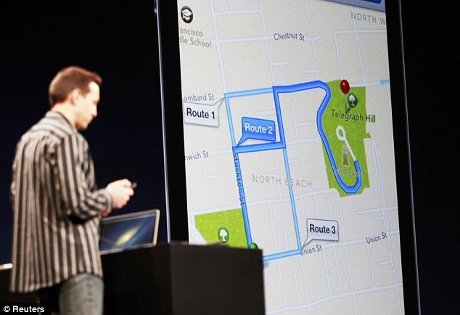
Yes, according to predictions that have been circulated widely, IOS 6 no longer use Google Maps. As quoted from the BBC, Tuesday (06/12/2012), Apple replaced it with three-dimensional map service sophisticated homemade claimed.

Terdepaknya Google Maps considered as a separate loss for Google. For about half the traffic from the mobile version of Google Maps from your Apple device.

Then what is the reason Apple ejecting Google Maps? The transition to the service itself is assessed map makes Apple better have plenty of opportunities to make money. Moreover, to avoid dependence from Google who later became his main rival in the mobile device market.

"What happens if one day Google decided to no longer provide a map for Apple? You can not have such dependence on competitors," said Colin Gillis, an analyst at BGC Partners.

Apple has made ​​a map that displays the city Flyover features in three dimensions. There are also traffic updates in real time and turn by turn navigation. IOS six reportedly can be downloaded in September 2012.

Saturday, June 16, 2012

Canon introduces the EOS 650D

Canon officially announced the launch of their latest entry level DSLR, the new EOS 650D (or Rebel T4i). The long awaited update to the popular EOS 600D retains the same 18MP CMOS sensor, but comes with the new Digic 5 processor (launched with the 5D Mark III) and allows for a continuous shooting mode of 5fps. The EOS 650D also boasts 9-point AF system each being a cross-type.

The EOS 650D now comes with improved range of ISO from ISO 100-12,800, which can be extended to ISO 25,600. The 3.0-inch articulating screen with 1,040,000 dots is also Canon’s first touchscreen in a DSLR. Launching with the EOS 650D are also a pair of new lenses, the EF-S 18-135mm f/3.5-5.6 IS STM lens and the EF 40mm f/2.8 STM lens that use Canon’s new Stepping Motor” technology, which silences the lenses while focusing. This allows for continuous AF while recording videos. Both the lenses cost $550 (AED 2,200) and $200 (AED 800) respectively.

The EOS 650D will be out by next month, retailing for $850 (AED 3,400) for the body only, $950 (AED 3,800) with the EF-S 18-55mm f/3.5-5.6 IS II lens kit, and $1,200 (AED 4,800) with the EF-S 18-135mm f/3.5-5.6 IS STM lens kit. Expect the prices to be slightly inflated during launch period.

PRESS RELEASE

Canon today launches the EOS 650D â€" a new, easy-to-use Digital SLR (DSLR) that offers high image quality and simple touch-screen operation, allowing anyone to capture beautiful images and Full HD movies. Ideal for photography beginners, the EOS 650D combines intelligent automatic shooting modes with a range of advanced features â€" making it easy-to-use today, with a full range of manual modes to explore tomorrow.

The EOS 650D is the first-ever EOS to feature a dual AF system, which ensures exceptional detail in stills and continuous autofocus tracking when shooting movies. At the camera’s heart is an 18 megapixel (MP) Hybrid CMOS sensor and powerful DIGIC 5 processing, enabling the capture of sharp, full resolution images at up to 5 frames per second (fps). A Vari-angle capacitive touch-screen also makes camera operation quick and easy, providing instant access to an extensive range of settings and scene modes.

Outstanding quality in all conditions

The EOS 650D offers outstanding image quality and performance. Its newly-developed 18MP APS-C Hybrid CMOS sensor provides super-fine resolution, capturing poster-sized images that are rich in colour and detail. Ideal for shooting in low light without flash, the camera features a native 100-12,800 ISO range, allowing the capture of naturallooking shots with minimal noise, while an expanded ISO 25,600 range also offers the ability to shoot in more extreme low-light conditions.

The EOS 650D is the first entry-level EOS to be powered by Canon DIGIC 5 processing, offering greater speed, responsiveness and advanced colour rendition. DIGIC 5′s 14-bit image processing provides beautiful and subtle transitions between colour tones, such as those of an evening sky, and its vastly-increased power also makes the camera ideal for capturing fast-moving action such as football or other sports.

The new dual AF system makes it easy to capture sharply-focused shots of all subjects, whether capturing stills or movies. A superior 9-point all cross-type AF system provides exceptional performance during stills shooting, offering precision accuracy when capturing sports, action and wildlife. Additionally, a new Hybrid AF System offers continuous autofocusing during movie recording, and when shooting in Live View1 mode.

Touch control and Vari-angle flexibility

Getting the perfect shot has never been easier thanks to the new 7.7cm (3.0″) Vari-angle Clear View LCD II Touch screen. Featuring capacitive technology, the screen is highly responsive and supports a variety of multi-touch gestures, such as pinching and swiping â€" making it easy to access shooting modes, alter settings and even capture a shot using the screen alone.

Touch control adds a different dimension to Live View shooting. You can select AF points, track faces and objects, and fine-tune image settings via the camera’s Quick Control screen. Navigation is instant and intuitive, while pinch-zooming in playback provides a great way to check the finer details of a shot. The Vari-angle hinge allows the screen to be angled and tilted to suit virtually any situation, while a super-sharp 1,040k-dot resolution ensures every detail is clearly displayed.

EOS Movie: Enhanced with Continuous AF

The EOS 650D makes it easy for anyone to shoot Full HD (1920x1080p) videos. Thanks to Hybrid AF, users can focus exclusively on story-telling while the camera continuously tracks the subject. New EF-S 18-135mm f/3.5-5.6 IS STM and EF 40mm f/2.8 STM lenses are also ideal for shooting videos, utilising a virtually-silent stepper motor to ensure movies are smoother and clearer than ever.

With Video Snapshot mode, anyone can create fun, fast-paced videos with a professionally-edited feel. Snapshots can be recorded in two, four, or eight second segments, and then combined or reordered in-camera ahead of playback. An integrated mini-HDMI port also makes it easy to share the results on any HDTV.

Explore with EOS

Two brand new shooting modes located on the mode dial help beginners to shoot confidently in difficult lighting conditions. HDR Backlight Control tackles tricky, brightly-backlit scenes by capturing three different exposures â€" under, correctly, and over-exposed â€" and combining them into one HDR image displaying both highlight and shadow detail. Handheld Night Scene, meanwhile, makes it easier to capture beautiful low-light evening shots with no tripod, rapidly shooting four different images before combining them into one detailed, blur-free picture.

The camera’s range of shooting modes also allows you to explore the boundaries of your creativity. Basic+ allows you to go beyond basic automatic settings, with a range of presets you can use to dramatically and instantly alter the mood of a shot. Canon’s fun range of Creative Filters can now be applied to images using the Touch-screen, with new ‘Art Bold Effect’ and ‘Water Painting Effect’ offering more ways to apply a creative twist to a shot. If you simply want to point and shoot, Scene Intelligent Auto mode does the work for you â€" analysing the scene and automatically selecting the best settings, so you can take great shots out of the box.

The EOS system â€" freedom to explore

As part of Canon’s EOS system, the EOS 650D is compatible with the world’s most comprehensive selection of lenses and accessories. Over 60 EF lenses cover everything from wide-angle and macro to extreme telephoto, and countless accessories provide the tools to meet virtually any creative challenge.

EOS 650D â€" key features

  • 18 MP APS-C Hybrid CMOS sensor
  • Full-HD movies with manual controls and continuous AF
  • 5 fps continuous shooting
  • Vari-angle Clear View LCD II Touch screen
  • ISO 100-12,800 sensitivity, extendable to ISO 25,600
  • 9-point wide-area AF
  • Integrated Speedlite Transmitter


Friday, June 15, 2012

Google Buy Meebo

Google bought the company Meebo instant messaging network. The move is evidence of a gigantic expansion of the company's ability to share pages on social media community.

The value of business transactions is not disclosed in terms of the deal was announced on Meebo company blog on Monday (4/6). Nevertheless, the Dow Jones All Things Digital through the canal in May 2012 reported that the acquisition price by Google Meebo is estimated at about 100 million U.S. dollars.


Meebo is a private company which claims to reach nearly half of Internet users in the land of Uncle Sam through "Meebo bar" him. The program allows the user to click for the page to comment or share your networking using social media. According to the company Meebo, the greatness of "Meebo bar" is can be customized and added to any page, without modifying the programming code of the page. (ANT / epn)

Facebook seeks to consolidate post-IPO lawsuits

NEW YORK (AP) â€" Facebook is seeking to consolidate the more than 40 lawsuits it faces following its rocky initial public offering of stock last month.

In a filing with a judicial panel on Friday, Facebook and the banks overseeing its IPO also outlined their case against the lawsuits, which they hope to consolidate in New York. They seek to put part of the blame on the Nasdaq.

Many of the lawsuits center on Facebook's May 9 disclosure that the number of mobile users it has is growing faster than revenue. The lawsuits claim that analysts at the big underwriters then lowered their forecasts and disclosed this with only a handful of clients.

Facebook and the banks say they did nothing illegal or even out of the ordinary.

Online retailer charges tax for using Internet Explorer 7

Online retailer Kogan has decided that they have spent, or rather wasted, enough of their IT department’s resources trying to make their updated site work with the extremely outdated IE7 browser.

As per their blog post, It’s not only costing us a huge amount, it’s affecting any business with an online presence, and costing the Internet economy millions.”

So what they have done instead is to impose a 6.8% tax to discourage users from using the 6 year old browser. Of course, anyone using the latest version of IE, Chrome, Firefox, Safari and Opera won’t have to pay anything extra.

As Internet citizens, we all have a responsibility to make the Internet a better place. By taking these measures, we are doing our bit. This will help us increase our efficiency, help keep prices for all smart shoppers down, and hopefully help eradicate the world of the pain in the rear that is IE7!”

Privacy breach discovered in Internet address bids

NEW YORK (AP) â€" The organization in charge of introducing new Internet addresses to rival ".com" says it briefly suspended access to some documents on its website after it discovered a privacy breach.

The Internet Corporation for Assigned Names and Numbers says it had mistakenly published postal addresses of individuals making bids for the names â€" contact information that was meant to be private. The disclosure was limited to cities and countries in some cases, while full street addresses appeared in others.

The discovery came late Thursday, a day after ICANN revealed nearly 2,000 proposals for new Internet suffixes and posted details on its website.

ICANN restored access to those documents after removing the contact information. It's not clear how long that took. ICANN did not immediately respond to requests for more information.

Man sues Apple over broken Time Capsule

Backing up your data is a crucial task that no one should take lightly. So is it really that hard to believe that a man in British Columbia is suing Apple for $25,000 because his three year old Apple Time Capsule went kaput?

Perminder Tung of Surrey, B.C. had backups of two computers and his iPhone being synced to his Time Capsule. Earlier this month, the unit refused to turn on and he called Apple Support, who did not provide any help as the unit was out of warranty. When he took the unit down to his local Apple store, a Genius there said that there have been defects with the Time Capsule line before, but that Tung’s unit was not part of a series of units that had been recalled previously. The units in question would not turn on or randomly shut down.

It’s debatable whether Tung will get anywhere with his case or not, but the Time Capsule line has in the past been the common target of legal battles, with several users being frustrated after they faced similar issues of the drives not powering on or suddenly calling it quits.

Thursday, June 14, 2012

Q&A on plans to expand the Internet address system

NEW YORK (AP) â€" Here are some questions and answers regarding plans to expand the Internet address system:

Q. What are domain names?

A. Think of them as shortcuts for navigating the Internet. Just as it's easier to find the Empire State Building at 350 Fifth Avenue in Manhattan rather than through its GPS coordinates, it's easier to type in "ap.org" rather than remember "165.1.59.220." Google and other search engines have reduced the need for domain names. But these search engines are essentially catalogs of the Internet, and they depend on the domain name to take you to what you're looking for. Also, domain names aren't used only for websites. The part after the "at" symbol in email addresses is the domain name.

Q. How many domain names are out there?

A. There are millions of domain names including "bbc.co.uk" and "Microsoft.com." If you're just thinking of the suffix, formally known as the top-level domain name, there are currently 312. The most popular is ".com," with about 100 million names registered. Anybody willing to pay $10 or less a year can get one. Others are restricted to certain groups, including ".aero" for the aviation industry and ".edu" for U.S. colleges and universities. The bulk of the suffixes are two-letter designations for countries and territories, such as ".fr" for France and ".aq" for Antarctica. Some countries also have suffixes in their native languages, so websites in China can use the Chinese equivalent of China rather than ".cn."

Q. Is the list static?

A. Suffixes come and go. The European Union gained ".eu," while Midway Islands and other U.S. minor outlying islands lost ".um." Following East Timor's independence, ".tp" became ".tl." A handful of others got added over the years, including ".biz" for businesses and ".xxx" for porn sites. On Thursday, bidding will begin for up to 1,000 more suffixes each year.

Q. Who decides these things?

A. An organization called the Internet Corporation for Assigned Names and Numbers is in charge of domain name policies. The U.S. government, which funded much of the Internet's early development, delegated the task to that group in 1998. ICANN is a nonprofit organization with headquarters in California and has board members from around the world, though the Commerce Department retains limited oversight of the group.

Q. How do I get my own suffix?

A. Begin by submitting an application â€" and paying a fee of $185,000. You'll need to make a 10-year commitment, during which you're liable for annual fees of at least $25,000. The money will pay for ICANN's costs setting up the system, reviewing applications and making sure parties do what they have promised once the suffix is operational. Some of the money will be set aside for potential lawsuits from unsuccessful applicants and others.

Q. I love Apple. When can I get my own website address ending in Apple?

A. Like many companies, Apple Inc. hasn't said whether it will seek ".Apple." It's also possible that an apple-growers group or the Beatles' management company, Apple Corps, will make a bid. It will be up to the company or organization winning the bid to decide whether a suffix is open to general use. It's doubtful Apple Inc. would let the public claim ".Apple" names if it gets the suffix, but entrepreneurs will likely propose other suffixes, such as ".web" and ".nyc," specifically for broader use.

Samsung to start their own Facebook

Samsung officials have confirmed that the company will start a new social networking service, akin to Facebook,  as soon as early next year.The new site will be accessible via internet connected devices such as TVs, Bluray players, and smartphones.

The idea is to build a network that’s accessible not only on Samsung products, but also other devices, a direction in which Samsung has already established itself with their ChatOn service. The recently launched IM application is available not only on Samsung’s Google Android powered devices, but also on Android, iOS, BlackBerry and iOS powered smartphones.

Samsung will be building their new social networking site, internally called ‘Samsung Facebook’, on their ‘Family Story’ platform, which they showed off in January, during CES 2012. Family Story itself is a social networking platform which focuses on chatting, photo sharing and calendar schedules.

By the end of the year, we will have a polished and finished version of Family Story that will be offered first to Samsung device users for free. The new service will become available in the first quarter of next year at the earliest,” said an official to Korea Times.

Subsequently, Samsung Facebook will be based on the Family Story platform. In order to handle the massive amounts of data for their social networking service, Samsung will integrate their service with Amazon’s cloud computing platform.

“The eventual goal is to expand our social media service across different devices from different companies across different mobile platforms. That includes cameras, televisions and blue-ray players,” the official said

Wednesday, June 13, 2012

6 Million "Password" LinkedIn User's broken "Hacker"


Data users of social networking sites LinkedIn succeeded in dibobol hacker (hackers) and has been published to the internet. LinkedIn parties themselves say, more than six million passwords (key words) users "in danger".

The hackers published the file containing the keywords coded into a web forum Russia.

They invited the hacker community to help solve the key word.

LinkedIn, which has more than 150 million users, said the key word has leaked that no longer applies.

Users will receive an e-mail with instructions to change it, said LinkedIn. They will receive a second e-mail with details on why the change was necessary.

Concerns about privacy

The news comes as the LinkedIn applications are forced to update their cell phone after security researchers discovered a flaw privacy.

Skycure Security said that the phone app sends calendar data without the password to the server LinkedIn "without the knowledge of" users.

That information includes meeting notes, which often contain information such as phone numbers and key codes for conference calls.

LinkedIn answer the, the application it does not anymore send data from sexy a memorandum of meeting your calendar.

The company also stressed that the calendar function is a feature option.

However, the researchers who discovered the flaw, said transmission data to the server LinkedIn performed without a "clear indication of the application to the user".

In a statement published on the company blog, the Head of Mobile Product LinkedIn Jeff Redfern said more information was added to the application so that users get a clearer picture of the transmission and use of their information.

Tuesday, June 12, 2012

New Internet suffix bids include '.lol,' 'bank.'

NEW YORK (AP) â€" If Google has its way, you won't need to type "Google.com" any more to do your searches. You can simply access the search engine at ".Google."

Google's bid for ".Google" as an Internet suffix is among about 2,000 proposals submitted as part of the largest expansion of the Internet address system since its creation in the 1980s. Google Inc. also wants to add ".YouTube" and ".lol" â€" the digital shorthand for "laugh out loud." Others want approval for ".doctor," ''.music" and ".bank."

If approved, the new suffixes would rival ".com" and about 300 others now in use. Companies would be able to create separate websites and separate addresses for each of their products and brands, for instance, even as they keep their existing ".com" name. One day, you might go to "comedy.YouTube" rather than "YouTube.com/comedy."

The organization behind the expansion, the Internet Corporation for Assigned Names and Numbers, will announce in London on Wednesday which suffixes have been proposed. Google and a handful of other companies disclosed some of their bids ahead of time. Most proposals, however, remain a mystery.

From a technical standpoint, the names let Internet-connected computers know where to send email and locate websites. But they've come to mean much more. Amazon.com Inc., for instance, has built its brand around the domain name.

The expansion will allow suffixes that represent hobbies, ethnic groups, corporate brand names and more.

It'll take at least a year or two, however, for ICANN to approve the first of these new suffixes. It could take a few months longer for them to appear in use.

Some of them never will if they are found to violate trademarks or are deemed offensive. Others will be delayed as competing bidders quarrel over easy-to-remember words such as ".web." When multiple applications seek the same suffix, ICANN will encourage parties to work out an agreement. ICANN will hold an auction if the competing bidders fail to reach a compromise.

The expansion, already several years in the works, had been delayed by more than a month this spring because of technical glitches with the application system.

Alex Stamos, whose Artemis Internet company is bidding for ".secure," said the expansion will "create much more specific neighborhoods with specific focus and goals."

Stamos envisions ".secure" as a neighborhood for banks, medical professionals, payroll providers and others needing to establish consumer trust. Websites that adopt ".secure" instead of ".com" in their names would go through additional screening and be required to follow certain security practices such as encryption of all Web traffic.

The suffixes are restricted to the richest companies and groups, which paid $185,000 per proposal. If approved, each suffix would cost at least $25,000 a year to maintain, with a 10-year commitment required. By comparison, a personal address with a common suffix such as ".com" usually costs less than $10 a year.

ICANN has received at least $350 million in application fees. The money will be used to set up the system, review applications and make sure parties do what they have promised once the suffix is operational. Some of the money will be set aside to cover potential lawsuits from unsuccessful applicants and others.

Despite the startup costs, suffixes could potentially generate millions of dollars a year for winning bidders. A startup company called ICM Registry now receives some $60 a year for every ".xxx" registered, including money from colleges and universities that have been buying names such as "KUgirls.xxx" to make sure others can't. That startup now wants ".sex," ''.porn" and ".adult."

Stamos said he expects to charge thousands of dollars for a ".secure" name. The idea is to attract just those businesses that need the higher level of security.

Not all bidders will be looking to sell names under their suffixes, though. Google, for instance, may decide to keep ".Google" for its own sites, though it indicated it might open ".YouTube" for brands to create video channels. Google declined comment on specifics beyond a recent blog post.

Skeptics worry that an expansion will mean more addresses available to scams that use similar-sounding names such as "Amazom" rather than "Amazon" to trick people into giving passwords and credit card information. Others worry that new suffixes could create additional platforms for hate groups or addresses ending in obscenities.

ICANN spent years crafting guidelines meant to curtail nefarious activities, but critics say there aren't enough safeguards in place. Critics include a coalition of business groups worried about protecting their brands in newly created names.

There's also a question of how useful the new names will be, at least among English speakers. Alternatives to ".com" introduced over the past decade have had mixed success. These days, Internet users often find websites not by typing in the address but by using a search engine. And with mobile devices getting more popular, people are using apps to bypass Web browsers entirely.

The demand for new suffixes appears greater outside the U.S. That's because many of the ".com" names had been grabbed by Americans who got on the Internet first. In addition, suffixes had been largely limited to the 26 letters of the English alphabet until now. The proposals to be announced Wednesday include some in other languages.

"I don't think any of these will be the next dot-com," said Bhavin Turakhia, founder and CEO of Directi Group, a Dubai company that is seeking ".click," ''.baby," ''.insurance" and 28 others. "Dot-com had too much of a legacy to be outdone in a short period of time. But it has potential to be a very strong alternative and over time capture reasonable market share."

ICANN has already allowed two major expansions of the addressing system. In 2000, it approved seven new domains, including ".info" and ".biz." It began accepting new bids again in 2004. It added seven from that round, including ".xxx" last year. It also cleared others on an ad hoc basis, including ".eu" for the European Union and ".ps" for the Palestinian territories.

Under the new system, the application process will be streamlined and allow for up to 1,000 new suffixes a year.

Jumbo Electronics unveils new Bravia television series

Press Release: Jumbo Electronics, the UAE-based consumer electronics giant, today unveiled the new BRAVIA® television line-up comprising two distinct series â€" the flagship HX series and the mid-level EX series. The new Sony Bravia series features an improved picture enhancement technology, X-Reality PRO, which enhances lower quality signals taking them closer to HD quality, as well as making 2D and 3D images clearer. The new HX and EX series also offer more channels, apps and connectivity options in the online TVs.

Sony’s HX855 series carries forward Sony’s distinctive Monolithic design incorporating Gorilla® Glass by Corning®, making the screen material thinner, lighter and stronger. Complete with X-Reality PRO and Motionflow XR 800, the HX855 is a fully Internet-connected television with built-in 3D, delivering a premium viewing experience. Furthermore, the stylish design makes the TV a valued addition to the home décor. Consumers wishing to step into internet-connectivity and Edge LED backlighting will not lose out on picture quality with Sony’s out-of-the-box Wi-Fi-ready EX650 series. The EX series uses Motionflow XR 200 processing, delivering superior Full HD 1080p resolution, and integrates the Clear Resolution Enhancer to provide vivid, clear and life-like picture.

Rakesh Khanna, Head of Sony, Jumbo Electronics says: “At Sony, we have always believed that the best part of the TV has been and will always be â€" the picture quality. This is where Sony rules the roost and the new series promises ‘Premium picture’ along with the many additional features. Each model of the continues our tradition of bringing trailblazing technology to consumers, allowing them to see the true beauty of whatever it is they are viewing.”

The new BRAVIA models offer new enhancements and additional innovations. Select models incorporate Dynamic Edge LED with local dimming that deliver brilliant Full HD (1080p) picture with increased brightness and outstanding contrast, particularly in superior deep blacks. Sony’s exclusive OptiContrast panel elevates the picture to the front surface of the TV and creates a dark background for rich, vibrant, high contrast pictures even in well-lit rooms.

The picture quality is further enhanced with Sony’s X-Reality PRO and X-Reality digital video processors. The dual-chip X-Reality PRO optical engine optimizes video sources by utilizing a vast database of signal patterns and comparing incoming signals with ideal scenes to display unprecedented detail and astonishingly vibrant colours. The X-Reality picture engine separates incoming video into its constituent parts of outline, texture and colour/contrast, and then applies image enhancements to deliver outstanding picture. Additionally, Sony’s newest version of Motionflow XR technology reduces blur caused by quick camera movements, enhancing sharpness and creating a smoother viewing experience for fast-paced sports and movie programming, as well as gaming. From the Sony Entertainment Network portal, consumers can find a variety of applications for online entertainment and information such as news, weather, games, and videos from YouTube™ as well as access to social network.

The DNLA-certified and Wireless LAN built-in HX models easily connect to and share content from mobile devices and computers, as well as allow consumers a wide variety of control options via Sony’s Media Remote and Remote Keyboard apps. Viewers can ‘throw’ a browsed website from a Smartphone to the BRAVIA for easier viewing. The application allows control of the web cursor with one thumb, tapping for selecting links, and pinching in and out to enlarge or shrink the viewable areas. The apps, available for download from both the Android Market and Apple App Store, also function as a full remote control with keyboard, allowing easy online content search and playback.

Monday, June 11, 2012

Apple kicks Google Maps off iPhone, adds Facebook

SAN FRANCISCO (AP) â€" Steve Jobs' vendetta against Google remains alive, eight months after the Apple co-founder died feeling betrayed by a company he once embraced as an ally.

Apple is escalating the feud between two of the world's most influential companies by dumping Google's mapping service as a built-in feature on most iPhones and iPads. Apple is also making it easier for users of those devices to share their lives on Facebook instead of Google's competing social network.

The snubs are part of an upgraded mobile operating system that Apple previewed Monday to kick off its 23rd annual developers conference in San Francisco.

Google's mapping service will be replaced by an Apple-designed alternative when the new software for mobile devices, iOS 6, is released this fall. Those who want to continue using Google Maps will have to go through additional hurdle, such as finding and installing its app.

It represents a major blow for Google Inc., which stands to lose mobile advertising revenue and valuable insights about people's whereabouts if users of the popular iPhone and iPad devices switch to Apple's mapping service.

Apple and Google are locked in a fight for the attention of hundreds of millions of mobile device users. The battle has been building since Google's 2008 release of its Android operating system to compete against the iPhone.

Android smartphones from companies such as Samsung Electronics Co. and Google's own Motorola division are the chief alternatives to the iPhone. Apple has sued those manufacturers, accusing them of ripping off the iPhone's ground-breaking features.

Google's Maps application has resided on the iPhone since the device's 2007 debut. At that time, the companies were so close that Eric Schmidt, then Google's CEO, appeared on stage with Jobs to hail their kinship.

Android destroyed the relationship. Before he died last October, Jobs told his biographer, Walter Isaacson, that he viewed Android as a form of "grand theft" from Apple and declared "thermonuclear war" against his former ally.

"This is a slap in Google's face," said Tim Bajarin, a Creative Strategies analyst who got to know Jobs well during his 32 years following the company. "I don't think Apple is ever going to be able to bury Android, but this is making it clear that they aren't going to send any more ad revenue Google's way, if at all possible."

Apple updates its iOS software every year, to coincide with the launch of a new iPhone. Google is scheduled to show off the latest developments in Android at a conference that will be held at the same San Francisco venue beginning June 27.

In a statement Monday, Google said it is "looking forward to continuing to build the perfect map for our users in the months and years ahead." In anticipation of Apple's announcement, Google last week previewed a series of upgrades to its mapping service in an effort to make it more convenient and compelling.

In another jab at Google, Apple also said it's building Facebook into iOS 6. That threatens to make it more difficult for Google to drive traffic to its Google Plus social network, a high priority for the company. As it is, Google has more than 170 million users while Facebook has more than 900 million users.

Among other things, users of Apple's new software will be able to update their Facebook status by talking to their phones and declare that they "like" movies and apps in Apple's iTunes store.

The tie-in with Apple's mobile devices could be a boon for Facebook Inc., based on the usage of Twitter since that online messaging service became part of the current mobile system, iOS 5. Apple says more than 10 billion tweets have been sent from its mobile devices since last year's upgrade to iOS 5.

Facebook, though, has warned investors that it still hasn't figured out how to make a lot of money from mobile devices, where so far it has proven more difficult to bring in as much ad revenue as on traditional computers.

The iOS 6 also will highlight more features from online business review service Yelp Inc. and online restaurant reservation service OpenTable Inc. Both of those companies are competing against Zagat, a review service that Google bought last year for $151 million.

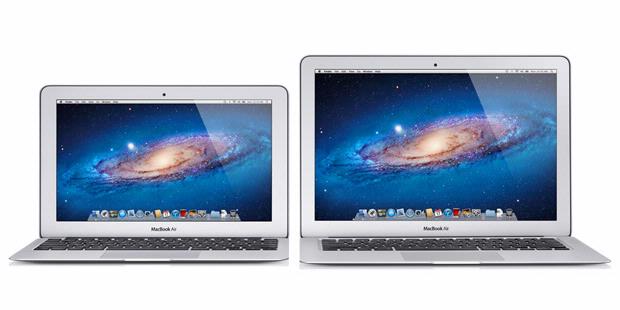
Besides the upcoming iOS, Apple also showed off updated laptops and new features in its software for Mac computers.

Investors appeared to be expecting something more revolutionary, such as more hints about Apple's ambition to expand into making TVs. Analysts had speculated that Apple would at least update the software on the Apple TV, a small box that connects a TV set to iTunes for movie downloads, as a prelude to perhaps launching a fully integrated TV set.

Apple Inc. shares closed down $9.15, or 1.6 percent, at $571.17. Google shares shed $11.95, or more than 2 percent, to close at $568.50.

Apple CEO Tim Cook delivered the keynote Monday at an event that last year turned out to be Jobs' farewell appearance. In a contrast to Jobs' showmanship, Cook spoke only briefly during a nearly two-hour presentation orchestrated by his top lieutenants.

Among other updates in iOS 6, Apple's voice-command application Siri will add a host of languages, including Spanish, Korean and Mandarin Chinese. "She" will also be able to launch applications and movies and will run on iPads for the first time.

Apple's new version of its Mac operating system, Mountain Lion, will go on sale next month for $20. The update brings features from Apple's phone and tablet software to the Mac. That includes the iMessage texting application, which will replace iChat.

Microsoft Corp., Apple's competitor when it comes to computer software, is also making Windows more like its phone software, with the release of Windows 8 later this year. A key difference is that Microsoft is betting that PCs will have touch screens, while Apple is betting they won't.

Mountain Lion will also bring dictation to Macs. Users will be able to input text by talking to the computer, in any program. This is already a feature in Windows.

Apple showed off a laptop with a super-high resolution "Retina" display, setting a new standard for screen sharpness.

The new MacBook Pro will have a 15-inch screen and four times the resolution of previous models, Apple executive Phil Schiller said.

Apple already uses "Retina" displays â€" with individual pixels too small to be distinguished by the naked eye â€" in its latest iPhones and iPads.

On the phones and tablets, the Retina display is a standard feature. On the MacBook, it's an expensive upgrade. The new MacBook will cost $2,199 and up, $400 more than the non-Retina MacBook with the same-sized screen.

Despite the high price, Forrester Research analyst Charles Golvin predicted the souped-up MacBook will be a hit. "It's a sexy machine," he said. "Any self-respecting gadget lover is going to be drooling over this thing."

The new MacBook borrows features from the ultra-slim MacBook Air. It's only slightly thicker, and like the Air, lacks a DVD drive. Instead of a spinning hard drive, it uses flash memory for storage. In the most radical departure from past PC designs, it lacks an Ethernet port. Those who don't want to use Wi-Fi to connect to the Internet will have to buy an adapter that goes into the MacBook's "Thunderbolt" port.

Apple's other MacBooks are being updated with the latest processors from Intel Corp. Apple will still sell a more traditional 15-inch MacBook Pro, with a standard display.

___

Peter Svensson contributed from New York.

Google Prepare Surprises "Fun" to Indonesia


Indonesia is considered to have contributed greatly to the growth of the global internet. To that end, Google will try to increase the internet penetration rate in Indonesia is so far only been in the range of 20 percent.

Google has another agenda that the end goal is to increase the internet penetration rate in Indonesia.

"But we can not explain what it is. Just a few weeks there will be an exclamation of Google to Indonesia, just wait on the game," said Google's Indonesia Country Head, Rudy Ramawy on stage Startup Asia 2012 Jakarta on Thursday (7/6/2012 ).

To increase the internet penetration rate in Indonesia, Google has a number of energy scattered all over the country to establish cooperation with relevant parties. "As the university, and internet access provider,"

He said the growth in penetration rates can be achieved through the provision of Internet access more affordable and accessible to everyone.

One of Google's efforts related to this is Google's cooperation with Nexian phone manufacturers in providing cheap Android phone.

Startup 2012 Jakarta Asia itself is an event for startup conference held by TechinAsia in Jakarta on 7 and June 8, 2012 held at the Annex Building Complex Wisma Nusantara, Hotel Indonesia traffic circle around.

In addition to the founders of startup conference with stakeholders, this event has a series of events Startup Arena, which will be selected 20 startup to run the various challenges that will be the opportunity to receive cash of 10 thousand dollars.

Lenovo releases Ultrabooks powered by 3rd gen Intel processors

Press Release: Lenovo (HKSE: 992) (ADR: LNVGY) today announced the worldwide availability of its coveted IdeaPad U310 and U410 Ultrabooks. Powered by the 3rd generation Intel® Core™ processors, Lenovo’s new U Series Ultrabook™ devices take the era of thin, lightweight and ultra-responsive mobile computing to a new level of affordability, without compromising quality or style. The new Ultrabooks are available in a variety of colors including Sapphire Blue, Aqua Blue, Cherry Blossom Pink, Graphite Grey or Metallic Red.

“Ultrabooks are an industry game changer that shift not only the way people think about laptop design, but also how much performance technology can be packed into such a thin and light device,” said Jack Lee, General Manager MEA, Lenovo. “Lenovo Ultrabooks free people from having to choose between a device with a productivity-focused user experience and one with a style and design that inspire their creativity. The IdeaPad U Series Ultrabooks embody this convergence and are the perfect tool for consumers to manage every aspect of their digital lives.”

As thin as a small paperback book, the 13.3-inch U310 and 14-inch U410 measure only 0.7-inch (18mm) and 0.83-inch (21mm) thick and weigh just 3.74lbs (1.7kg) and 4.18lbs (1.9kg), respectively. Even with a thin and light frame, these Ultrabook devices offer the performance to handle any mobile computing task with 3rd generation Intel® Core™ i3, i5 or i7 processors, up to 1 TB of storage; NVIDIA GeForce® graphics and up to nine hours of battery life on the U410; and up to seven hours of battery life on the U310. They also feature Dolby® Home Theatre® v4 for intense sound quality and have Intel® Wireless Display (WiDi) technology to project videos and other content wirelessly on any big screen.

Available with 32GB solid state drives (SSD) to cache data, Lenovo’s latest Ultrabooks put a stop to slow wait times. Thanks to Lenovo’s new Enhanced Experience 3 optimization for Windows 7 PCs, the new Ultrabooks achieve ultra-fast boot up and quick resume from sleep that’s up to 40 percent faster than non-optimized devices. Lenovo Smart Update further amplifies the user experience by enabling the ultra-brilliant U310 and U410 to automatically update email, IM chats and social media messages even when in sleep mode. Watch the product tour here.

“The IdeaPad U310 and U410 Ultrabooks deliver on the next generation mobile computing experience,” said Kirk Skaugen, vice president and general manager of Intel’s PC Client Group. “Working with Lenovo, we’ve delivered stunning visuals and amazing performance with our 3rd generation Intel Core processors in exceptionally thin and light designs that meet the needs of today’s most demanding mobile users.”

The IdeaPad U Series Ultrabook devices will be available for sale beginning today in many countries worldwide as well as on Lenovo’s website this week. Later this month, the Ultrabooks will be available via major retailers in the region, including the UAE, Egypt and KSA. MSRP for models of the IdeaPad U310 starts AED 3,399 and AED 3,699 for the IdeaPad 2U410 Ultrabook.